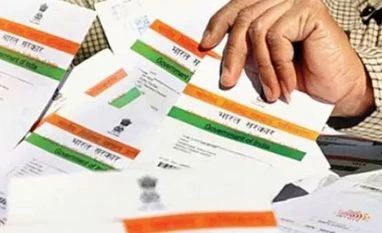
As the world debates use of big data and analytics to improve financial inclusion, India's Aadhaar system has come in for praise by a global body on financial reforms for expanding banking reach and lesser use of cash.
In a progress report on efforts to assess and address decline in correspondent banking, the Financial Stability Board (FSB) said its action plan in this regard is making good progress but the fall in numbers is continuing.
"A decline in the number of correspondent banking relationships remains a source of concern for the international community," it said, while flagging issues like problems in international payments and some payment flows being driven underground.
This may have adverse consequences for financial inclusion, as well as the stability and integrity of the financial system, it added.
The FSB has submitted its action plan in this regard to the G20 Summit, which begins here tomorrow and is being attended by Prime Minister Narendra Modi along with the leaders of the world's other largest economies.
The FSB has been established to coordinate at the international level the work of national financial authorities and global standard-setting bodies in order to develop and promote the implementation of effective regulatory, supervisory and other financial sector policies.
It has established a Correspondent Banking Coordination Group (CBCG) to coordinate and maintain impetus in the implementation of the action plan.
On potential applications of financial technologies, the FSB said the CBCG had an initial discussion on whether advances in big data and analytics might be usefully combined with KYC utilities, better information in payment messages and the LEI (Legal Entity Identifier) to facilitate due diligence on correspondent banks and transaction monitoring.
"Biometric technology and centralised databases have begun to be used as a means of verifying customers' identities in some jurisdictions such as India, to support financial inclusion and thereby a lesser use of cash.
"This in turn could help address some of the issues faced by remittances," it added.
The FSB further said financial technologies can also facilitate secure sharing of information between financial institutions, while striking the right balance between supporting innovation and managing any ML/TF (money laundering/terror financing) risks that may arise.
(Only the headline and picture of this report may have been reworked by the Business Standard staff; the rest of the content is auto-generated from a syndicated feed.)

 "G20 Summit: Aadhaar praised by global body for boosting cashless economy")


 Connect with us on WhatsApp