Air pollution level in Kolkata much higher than permissible: CSE
The state requires emergency pollution control measures that Delhi has started to enforce
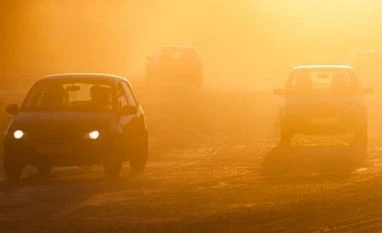
Press Trust of India Kolkata The city's air pollution level is much higher than the permissible limit, the Centre for Science and Environment (CSE) has found and recommended that Kolkata should start acting on emergency pollution control measures like Delhi.
After analysing the official ambient air quality data in Kolkata over the week, a team of CSE researchers found that PM 2.5 (fine particulate matter) levels are three times higher than the standard, while NO2 (nitrogen dioxide) levels are double of what is considered safe.
Ambient air quality refers to the quality of outdoor air in our surrounding environment.
"CSE's exposure monitoring provides clinching evidence of the alarming dose that an average Kolkatan breathes on a daily basis in different parts of the city. It is 2 to 3 times higher than the ambient level recorded by official monitors," a report by CSE said.
The official ambient air quality monitoring shows a 61% increase in particulate matter in just four years - 2010 to 2013. The levels exceed standards by 2.7 times.
"Application of National Air Quality Standards show that November onwards more days fall in the air quality categories of poor, very poor and severe which enhances public health risk. This requires pollution emergency measure that Delhi has started to enforce," the report said.
"Kolkata, while having made some strides in meeting air quality challenges, faces newer challenges," said Anumita Roychowdhury, head of CSE's air pollution control campaign.
"We have found that direct exposure to toxic fumes is very high in the city. It needs a technology leapfrog, scaling up of public transport, integrated multi-modal transport options, car restraints and walking for clean air," she said.
The CSE team analysed data from the Central Pollution Control Board and West Bengal State Pollution Control Board while the data on PM 2.5 levels are recorded at the American Consulate.
According to the report, every year pollution levels rise very rapidly in winter due to low wind speed, low temperature and inversion trap pollution. Particulate levels can be as high as four times the standards.
One of the highest levels was noted during early morning near Rabindra Sarobar Lake, a prominent recreation place where people throng for exercise in the morning.
"This only brings out the irony of morning exercise in a polluted environment," the report said.

 "Air pollution level in Kolkata much higher than permissible: CSE")


 Connect with us on WhatsApp