Australia today approved a controversial coal port expansion to support projects, like Indian mining giant Adani's 6.5 billion dollar Carmichael mine in Central Queensland, despite opposition from green groups which claim it will impact the fragile Great Barrier Reef.
The Abbot Point port involves dredging 1.1 million cubic metres of spoil near the Great Barrier Reef Marine Park, which will then be disposed off on land.
The approval lists a number of strict conditions that the project must fulfil before going ahead, including how and where the sediment can be moved.
The decision comes two months after the government approved Adani's plan to build one of the world's biggest mines.
Abbot Point is located about 25 kilometres north of Bowen on the north Queensland coast, about 400 kilometres from the vast coal reserves of the Galilee Basin.
The expansion will create a huge port capable of handling up to 120 million tonnes of coal per annum and would enable coal to be shipped from proposed mining projects in the Galilee Basin, like Adani's Carmichael mine.
Federal Environment Minister Greg Hunt issued the approval only after re-engineering reduced dredging by 97 per cent from the original proposal, according to his spokesman.
"All dredge material will be placed onshore on existing industrial land," the spokesman said, adding the project has been approved in accordance with national environment law subject to 30 strict conditions.
Conservationists have condemned the decision.
"Thousands of tonnes of seafloor will be torn up and dumped next to the internationally significant Caley Valley wetlands. Sea grasses which feed dugongs and turtles will be torn up for the coal industry," Imogen Zethoven from the Australian Maritime Conservation Society, said.
"Hundreds more coal ships will plough through the reef every year," Zethoven said.
The Worldwide Fund for Nature (WWF) said the alternative proposed for disposing of the sediment is not much better than dumping it at sea.
"Although we're pleased that the dredge spoil can no longer be dumped at sea, it's not appropriate to place it beside an internationally significant wetland, when there are better locations available further inland," WWF spokeswoman Louise Matthiesson said.
Greenpeace said the Abbot Point green light was "irresponsible for the reef, illogical and unnecessary".
"It's illogical to expand the port to make capacity for the proposed Carmichael mine, because it is a dead-end prospect," said Greenpeace reef campaigner Shani Tager.
Adani, however, welcomed the announcement, saying, "The expansion of Abbot Point, the lifeblood of Bowen, is key to Adani's plans to deliver 10,000 direct and indirect jobs and 22 billion dollars in taxes and royalties to Queensland.
"Adani welcomed and willingly supported the move to an
onshore disposal of dredged material last year, when a site not previously available became a viable option for proximate, well-managed disposal of dredged material," the firm said in a statement.
"This is the third time a well-managed, strictly regulated, science and evidence-based expansion approval has been the subject of a state and federal government approval process since 2010.
"The approval given by Minister Hunt to the Queensland Government mirrors the approvals given to Adani's mine at Carmichael and North Galilee Basin Rail projects, in that they reflect the strictest, world's best practice environmental safeguards," the statement said.
"Adani, working with the Queensland Government, is confident that the strict conditions placed on this project will enable the jobs and economic benefits that will flow from the expansion of this vital port for exports from our state to proceed."
But Queensland Premier Annastacia Palaszczuk said the expansion would not go ahead unless Adani could afford it.
"Once again I have made it very clear that this is a private company and the private company Adani must get the finance independently if they're going to go ahead," she said.
"There will be no State Government, no taxpayers' money, going towards this project."
Palaszczuk also said the State Government would be attaching a number of strict environmental conditions.
"That is a matter that the state Environment Department is currently assessing at the moment - we must protect our iconic Great Barrier Reef," she said.

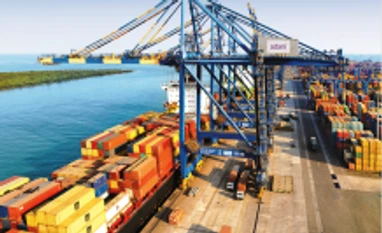 "Australia approves port expansion to support projects like Adani's Carmichael mine")


 Connect with us on WhatsApp