
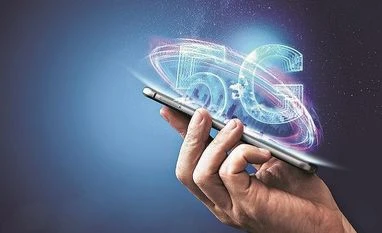
In race to bridge tech gap with US, China rolls out 5G in 50 cities
Despite the success of 5G networks at home, Chinese telecom equipment giants have faced regulatory push back abroad
 "In race to bridge tech gap with US, China rolls out 5G in 50 cities")
WebinarsNew
Deep DiveNew
Explore Business Standard
Despite the success of 5G networks at home, Chinese telecom equipment giants have faced regulatory push back abroad
China's three major state telecom operators rolled out 5G wireless technology Thursday, as the country races to narrow its technology gap with the US amid a bruising trade war.
China Mobile, the country's largest carrier, announced its 5G services were available in 50 cities -- including Beijing, Shanghai and Shenzhen -- with packages starting from 128 yuan (USD 18) a month.
Rivals China Telecom and China Unicom are also offering services at comparable prices in major cities, according to notices on their websites.
The ultra-fast mobile internet service -- which is 100 times faster than existing 4G networks -- allows consumers to download full-length films within seconds, or use apps with virtual reality.
The technology will also pave the way for driverless cars, further automation in factories, and allow users to remotely control appliances such as coffee makers and ovens via the internet.
China is expected to be a front-runner in the adoption of 5G services with over 170 million 5G subscribers by next year, according to estimates by China Telecom.
South Korea will be in second place with a predicted 75,000 users, followed by the US with 10,000, analysts at Sanford C. Bernstein said in a research note last week.
"China will promote the deep integration of new generation information technology and the real economy," said Chen Zhaoxiong, vice minister of the Ministry of Industry and Information Technology at a technology conference Thursday.
"This involves accelerating the integration and application of 5G in industries, transportation, energy, agriculture, education and health," Chen said, according to a statement on the ministry's website.
Beijing has been pushing for a quick rollout of the technology, and China's state economic planner said in January that developing a 5G network was one of its "investment priorities" this year.
Despite the success of 5G networks at home, Chinese telecom equipment giants have faced regulatory push back abroad.
The US Federal Communications Commission on Monday said it was considering blocking telecom carriers from buying equipment from Chinese tech companies Huawei and ZTE.
The US is also threatening crippling sanctions on Huawei, which is expected to be a leading player in offering 5G network hardware.
Washington has expressed fears that Huawei's equipment could contain security loopholes that allow China to spy on global communications traffic, and has been lobbying European countries to stay clear of it.
The company has repeatedly denied the US accusations.
First Published: Oct 31 2019 | 5:31 PM IST


 Connect with us on WhatsApp