Defence Ministry today approved the much delayed purchase of 145 Ultra Light Howitzers, worth about Rs 5,000 crore, from the US and also the bulk production of 18 Dhanush artillery guns, the first acquisition of such weapon systems by the Army in three decades since the Bofors scandal.
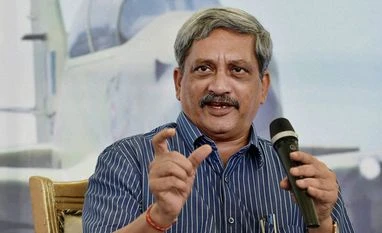
Defence Acquisition Council (DAC), chaired by Defence Minister Manohar Parrikar, took up 18 proposals including new schemes worth Rs 28,000 crore for discussion.
Another key project that got an Acceptance of Necessity (AON), which will now allow the Navy to issue tenders, was the proposal to build six next generation missile vessels under “Buy Indian” category for Rs 13,600 crore.
"DAC has approved progressing of ongoing case of procurement of 145 Ultra Light Howitzers through the Foreign Military Sales (FMS) route from US. DAC directed independent progressing of offset. Th delivery of these guns will be in India which will help in substantial saving of transportation cost," a senior Defence Ministry official said.
The DAC has also shortened the supply period of the guns, with a strike range of 25 kms, sources said though the exact period could not be known.
Explaining the process, the officer said that India had sent a letter of request to the US government showing interest in buying the guns which will be deployed in high altitude areas in Arunachal Pradesh and Ladakh, bordering China.
The US had responded with a Letter of Acceptance and today's DAC looked into the terms and conditions and approved it.
This letter will now be sent back to the US and the process for the payment of first installment will begin.
The offsets, under which BAE Systems, manufacturer of the gun, will invest about USD 200 million, will be pursued independently.
While 25 guns will come to India in a fly away condition, the rest will be assembled at the proposed Assembly Integration and Test facility for the weapon system in India in partnership with Mahindra.
The DAC also noted the "satisfactory progress" in manufacture of indigenous Dhanush guns, also known as Desi Bofors.
"While three guns would be delivered for user exploitation by June 30, three more will be handed over by September end. DAC also cleared bulk production of 18 guns to enable better exploitation and setting up of indigenous production," the officer said.
The gun, a towed howitzer with a strike range of 38-km, has been developed by Ordnance Factory Board (OFB), Kolkata, after going through the design and voluminous documents running into more than 12,000 pages which were delivered to India under the first phase of Transfer of Technology as part of the Bofors gun deal in late 80s.
Costing about Rs 14 crore a piece, Dhanush is comparable
to most current generation weapons systems which are in use by different countries.
Along with electronic gun-laying and sighting systems and other features, the indigenous gun has an enhanced 11-km range as against the gun range of 27-km of the imported Bofors.
The Army is in desperate need of new artillery guns. On the M777 guns, Defence sources have said that even though this deal would be through FMS, the "spares, maintenance and ammunition will be operated through Indian systems".
Sources said at least six tenders have been issued so far but were cancelled due to a number of reasons including blacklisting and single vendor scenario.
The plans to acquire such guns were first mooted under Army's Field Artillery Rationalisation Plan (FARP) formulated in 1999.
Meanwhile, the DAC also reviewed the ongoing procurement case of SRSAM and Very Short Range Air Defence (VSHORAD) System. "It was decided to keep on the ongoing acquisition process going in a multi-vendor situation", the officer said.
The DAC, which considered Armoured Figh Vehicle Protection and Counter Measure System for T90 tanks directed this to be taken up as indigenous project to strengthen future capability.
The Council also approved a Rs 386-crore project for modernisation and augmentation of facilities at naval dockyard and naval ship repair yards.
Acquisition of five diving support craft for Rs 150 crore was also approved.
The DAC also approved buying of indigenously made simulators for Jaguar aircraft for Rs 500 crore and setting up of an electronic warfare range for Rs 1,300 crore through indigenous capability.

 "Ministry nod to buy 145 ultra light howitzers")

