
Carlos Ghosn 'fled by bullet train', Japan vows to bolster borders
The details of his escape remain spotty, with Japan saying it is still investigating how he slipped past strict security measures imposed as part of his bail conditions
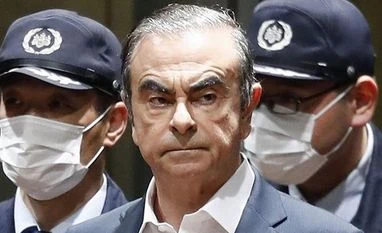 "Carlos Ghosn 'fled by bullet train', Japan vows to bolster borders")
Explore Business Standard
The details of his escape remain spotty, with Japan saying it is still investigating how he slipped past strict security measures imposed as part of his bail conditions
New reports emerged Monday on how fugitive former Nissan boss Carlos Ghosn jumped bail in Japan, as the country's justice minister said border controls would be bolstered after the escape.
The 65-year-old executive skipped bail nearly a week ago, fleeing Japan where he was awaiting trial on multiple counts of financial misconduct that he denies.
The details of his escape remain spotty, with Japan saying it is still investigating how he slipped past strict security measures imposed as part of his bail conditions.
Citing people involved in the investigation, Nippon Television Network (NTV) said Monday that Ghosn boarded a "shinkansen" bullet train from Tokyo's Shinagawa station on December 29.
He got off at a station in western Osaka, arriving around 7:30pm and taking a taxi to a hotel near Kansai Airport, NTV said.
He is thought to have taken a private jet the same day from the airport, bound for Istanbul, where he switched planes and continued to Beirut.
Last week, local media reported Ghosn was caught on security camera leaving his Tokyo home by himself around noon on December 29.
But the exact circumstances of his departure from Japan are still shrouded in mystery.
The justice ministry said it did not have records of Ghosn departing Japan.
"It is believed that he used some wrongful methods to illegally leave the country," Justice Minister Masako Mori said at a press conference on Monday.
"I have instructed the immigration agency to further tighten the departure process," she added.
The Wall Street Journal has reported that Ghosn was loaded onto the flight from Osaka in a large case for audio equipment, which was later found at the back of the cabin.
The newspaper cited unnamed sources close to the investigation in Turkey as saying that holes had been drilled into the bottom of the container to ensure the businessman could breathe.
Japan's transport ministry told AFP that luggage checks are not mandatory for private jets.
"Operators of private jets decide if luggage checks are necessary or not while airline operators are obliged to conduct security checks under Japan's aviation law," a ministry official told AFP.
"The security checks are carried out to prevent danger such as bombs, and to prevent hijacks," he said, adding such risks are considered less likely for private jets.
Ghosn, who has French, Brazilian and Lebanese nationalities, was able to enter Lebanon on a French passport, according to airport documents seen by AFP.
A court in Tokyo had allowed Ghosn to keep a second French passport as he needed one to travel inside Japan, a source close to the matter has told AFP.
Japan has launched a probe into the humiliating security lapse and prosecutors said they would "coordinate with the relevant agencies to swiftly and appropriately investigate the matter."
Ghosn has vowed to give his own account at a hotly awaited press conference in Beirut this week.
First Published: Jan 06 2020 | 1:40 PM IST

