
Govt taking steps to stop Himalayan waters from flowing into Pakistan
The minister's comments assume importance as after the Pulwama terror attack early February and Delhi's retaliatory bombing of a terror camp in Balakot
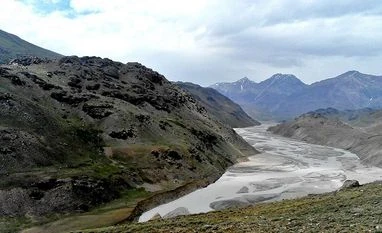 "Govt taking steps to stop Himalayan waters from flowing into Pakistan")
WebinarsNew
Deep DiveNew
Explore Business Standard
The minister's comments assume importance as after the Pulwama terror attack early February and Delhi's retaliatory bombing of a terror camp in Balakot
Union water resources minister Gajendra Singh Shekhawat has said the government has begun the process of stopping the waters from the Himalayan rivers flowing into Pakistan without violating Indus Water Treaty.
"Work has already begun to stop the waters that flow into Pakistan (under the Indus treaty). I am talking about the water which is going to Pakistan, and I am not talking about breaking the Indus treaty," Shekhawat said here Tuesday evening.
The minister's comments assume importance as after the Pulwama terror attack early February and Delhi's retaliatory bombing of a terror camp in Balakot, the bilateral ties have hit new lows.
The Indo-Pak relations dived further after the government scrapped the Articles 370 and 35A that gave special rights to Jammu & Kashmir on August 5 following which Islamabad recalled its ambassador.
Following the development in J&K, Islamabad has also accused New Delhi of waging a "fifth-generation warfare", and said the latter had failed to inform it about the release of dam waters into the Sutlej leading to floods across Pakistan.
"The point is how we can stop the excess waters flowing into Pakistan and use them. There are some reservoirs and rivers which are outside the catchment areas. We will divert those and we can use the water in the lean season. "Today, all our reservoirs are full but we can use that water flowing into Pakistan now and divert it to the Ravi," Shekhawat said.
The minister also said dams are built not only to generate electricity but also for use in the lean season. The Indus Water Treaty of September 1960 lays down the rules for sharing the waters from the Indus and its tributaries that flow through both the countries.
The treaty vests the control of the Beas, the Ravi and the Sutlej with India, while Pakistan controls the Indus, the Chenab and the Jhelum.
Since Pakistani rivers receive more waters from India, the treaty allows India to use the Indus, the Chenab and the Jhelum waters for limited irrigation and unlimited use for power generation, domestic, industrial and non-consumptive use like navigation, fisheries while laying down the precise regulations for India to build projects.
First Published: Aug 21 2019 | 5:40 PM IST


 Connect with us on WhatsApp