
Piyush Goyal convenes sector specific meetings on RCEP on Monday
Representatives of industry bodies such as CII and FISME would also attend the meeting
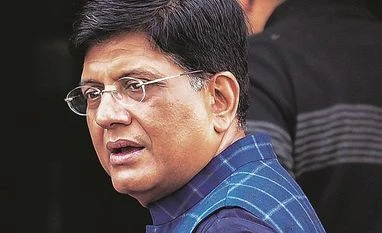 "Piyush Goyal convenes sector specific meetings on RCEP on Monday")
WebinarsNew
Deep DiveNew
Explore Business Standard
Representatives of industry bodies such as CII and FISME would also attend the meeting
Ahead of trade minister-level deliberations in China on the proposed RCEP agreement, the commerce ministry has convened a meeting of sector specific players, particularly from steel, on Monday, an official said.
The Regional Comprehensive Economic Partnership (RCEP) is a mega free trade agreement being negotiated among 16 countries.
It comprises 10 ASEAN group members (Brunei, Cambodia, Indonesia, Malaysia, Myanmar, Singapore, Thailand, the Philippines, Laos and Vietnam) and India, China, Japan, South Korea, Australia and New Zealand.
Senior officials and industry players from sectors including steel, automobile, MSME, engineering and heavy industry would participate in the day long meeting, the official said.
Representatives of industry bodies such as CII and FISME would also attend the meeting.
The deliberations assume significance as base metal and steel sector have raised reservations over proposed import duty cuts under the RCEP agreement. Certain steel sector players have already demanded removal of the segment from the purview of existing free trade agreements with Japan and South Korea. They have claimed that the pact has not benefitted them.
RCEP trade ministers are meeting in Beijing, China next month to take stock of the progress of negotiations.
The 27th round of meeting at chief negotiators level is also happening in China later this month.
India has registered trade deficit in 2018-19 with as many as 11 RCEP member countries - including China, South Korea and Australia - out of the grouping of 16 nations that are negotiating a mega trade pact since November 2012.
RCEP negotiations, which started in Cambodian capital Phnom Penh in November 2012, aims to cover goods, services, investments, economic and technical cooperation, competition and intellectual property rights.
Under a free trade agreement like RCEP, member countries significantly reduce or eliminate customs duties on maximum number of goods traded among them. They also liberalise norms to promote trade in services and boosting investments.
First Published: Jul 21 2019 | 4:40 PM IST


 Connect with us on WhatsApp