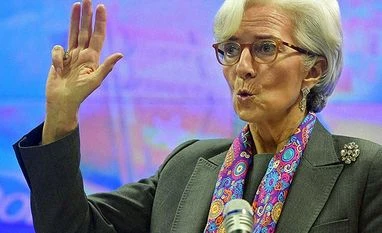
IMF chief Christine Lagarde today warned of a repeat of high market volatility and capital outflows when US Fed hikes rates next time and asked India and other emerging markets to be prepared for such an eventuality.
Echoing RBI Governor Raghuram Rajan, she also called for greater co-ordination between central bankers because "the timing of the interest rate lift-off and the pace of subsequent rate increases can still surprise markets".
Addressing a gathering at the Reserve Bank here, she asked central bankers in the West to give a clearer, effective communication of their policy intentions to the emerging world to help them contain market volatility.
"I am afraid this ("taper tantrum of May and June of 2013") may not be a one-off episode. This is so, because the timing of the interest rate lift-off and the pace of subsequent rate increases can still surprise markets," she said.
Warning of a possible repeat of the high market volatility and indiscriminate capital outflows when the US hikes its rates, she said a portfolio rebalancing out of emerging economies is possible leading to market volatility.
She also asked emerging markets to be prepared to tide over a repeat of the 2013 volatility by effectively dealing with the market uncertainties.
The last time the US hiked rates was in 2006 during Alan Greenspan time who had brought to record lows.
The IMF Managing Director, however, said she sees scope for the greater international policy cooperation to minimise the negative spillovers.
Supporting Rajan's previous calls for greater co-ordination between central bankers of the emerged market and the emerging market, she said: "Clear and effective communication of policy intentions can reduce the risk of creating very large market volatility.
"Though admittedly it is a difficult task, there is scope for greater international policy cooperation to minimise the negative spillovers."
The IMF chief was giving a speech on 'Spillovers From Unconventional Monetary Policy: Lessons for Emerging Markets' at the RBI headquarters here.
Admitting that the easy money policy of the West since the 2007-08 credit crisis has helped the emerging world, the IMF chief said such policies also led to a build-up of risks in this part of the world.
It may be noted since the tapering talk began in mid-May 2013 by the then US Fed chief Ben Bernanke, the rupee went on free fall as FIIs pulled out nearly $19 billion from the country.
As the crisis persisted, the rupee touched a historic low of 68.85 to the dollar on August 30 2013. After Rajan took over in September there was a massive stability in the rupee and last year it was the best performing Asian currency.

 "Get ready to see huge capital outflows, IMF warns EMs")


 Connect with us on WhatsApp