India reneging on promise by conducting naval drills in SCS: Chinese expert
Says purpose of drills is clearly aimed at impacting China's submarines in the India Ocean
Press Trust of India Beijing India, which is conducting major naval drills with Singapore in the disputed South China Sea, has "reneged" on its promise not to provoke China on the sensitive issue, a Chinese military expert said on Monday.
Judging from the deployment of anti-submarine weapons, the purpose of the drills is clearly aimed at impacting China's submarines in the India Ocean, which India regards as a "threat" to its influence in the area, Song Zhongping, a military expert who used to serve in the People's Liberation Army Rocket Force was quoted as saying by the state-run Global Times.
"India had promised not to take sides and provoke China on the South China Sea disputes. But the country is reneging on its promise by conducting such major drills in the area," Song said.
Navies of India and Singapore last Thursday began a seven-day-long mega maritime exercise in the SCS which has been witnessing a growing Chinese assertiveness.
The drill code-named "SIMBEX" (Singapore-India Maritime Bilateral Exercise) aims to enhance inter-operability between the two navies.
China had said that if such exchanges and cooperation is for the benefit of regional peace and security, then it has no opposition to the drills.
"We just hope that when the relevant countries conduct such exchanges and cooperation, they should bear in mind such activities should not hurt the interests of other countries or have any negative impact to regional peace and stability," Chinese Foreign Ministry spokesperson Hua Chunying said on May 19.
Song also said the high-level of cooperation between India and Japan, including the "Freedom Corridor" that connects Asia-Pacific to Africa, can also be seen as pushback against China's Belt and Road initiative.
The close bilateral cooperation is the previous Obama administration's legacy, in which Japan and India were meant to keep China at bay, both politically and militarily, Qian Feng, an expert at the Chinese Association for South Asian Studies, was quoted by the report.
Qian also stressed that India's recent operations in Southeast Asia are a political investment. India could use its influence in ASEAN countries as a bargaining chip in negotiations with China, once ties between China and ASEAN (Association of Southeast Asian Nations) countries get strained over South China Sea disputes, he said.
He also referred to reports that India and Japan are working on infrastructure projects, including the expansion of Iran's Chabahar port and Sri Lanka's Trincomalee port, and the development of the Dawei port along the Thai-Myanmar border.
India did not send an official delegation to China to attend last week's 'Belt and Road Forum for International Cooperation' in Beijing in view of its concerns over the China-Pakistan Economic Corridor (CPEC) which passes through the Pakistan-occupied Kashmir (PoK).
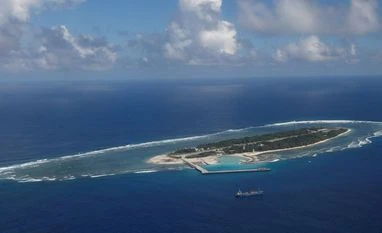
China claims almost all of the South China Sea. Vietnam, the Philippines, Malaysia, Brunei and Taiwan have counter claims over the area.

 "India reneging on promise by conducting naval drills in SCS: Chinese expert")


 Connect with us on WhatsApp