Large solar storm sparks global aurora and doubles radiation levels on Mars
This event was big enough to be detected at Earth too, even though Earth was on the opposite side of the Sun from Mars
Press Trust of India Washington An unexpectedly strong solar storm hit Mars this month, sparking a global aurora and doubling radiation levels on the red planet, NASA scientists say.
The solar event on September 11 sparked an aurora more than 25 times brighter than any previously seen by the MAVEN orbiter, which has been studying the Martian atmosphere's interaction with the solar wind since 2014.
It produced radiation levels on the surface more than double any previously measured by the Curiosity rover's Radiation Assessment Detector (RAD) since that mission's landing in 2012. The high readings lasted more than two days.
"NASA's distributed set of science missions is in the right place to detect activity on the Sun and examine the effects of such solar events at Mars as never possible before," said Elsayed Talaat, programme scientist at NASA Headquarters in Washington.
Strangely, it occurred in conjunction with a spate of solar activity during what is usually a quiet period in the Sun's 11-year sunspot and storm-activity cycle.
This event was big enough to be detected at Earth too, even though Earth was on the opposite side of the Sun from Mars.
"The current solar cycle has been an odd one, with less activity than usual during the peak, and now we have this large event as we're approaching solar minimum," said Sonal Jain of the University of Colorado Boulder's Laboratory for Atmospheric and Space Physics, who is a member of MAVEN's Imaging Ultraviolet Spectrograph instrument team.
"This is exactly the type of event both missions were designed to study, and it's the biggest we've seen on the surface so far," said RAD Principal Investigator Don Hassler of the Southwest Research Institute in the US.
"It will improve our understanding of how such solar events affect the Martian environment, from the top of the atmosphere all the way down to the surface," Hassler said.
RAD monitored radiation levels inside the encapsulated spacecraft that carried Curiosity from Earth to Mars in 2011 and 2012 and has been steadily monitoring the radiation environment at Mars' surface for more than five years.
RAD findings strengthen understanding of radiation's impact on Mars habitability, a key objective of the Curiosity mission.
NASA is also using RAD findings for planning the safety of human-crew missions to Mars.
Highly energetic solar events can significantly increase the radiation that penetrates through the atmosphere to the Mars surface.
The increased radiation also interacts with the atmosphere to produce additional, secondary particles, which need to be understood and shielded against to ensure the safety of future human explorers.
"If you were outdoors on a Mars walk and learned that an event like this was imminent, you would definitely want to take shelter, just as you would if you were on a space walk outside the International Space Station," Hassler said.
"To protect our astronauts on Mars in the future, we need to continue to provide this type of space weather monitoring there," he said.
(Only the headline and picture of this report may have been reworked by the Business Standard staff; the rest of the content is auto-generated from a syndicated feed.)

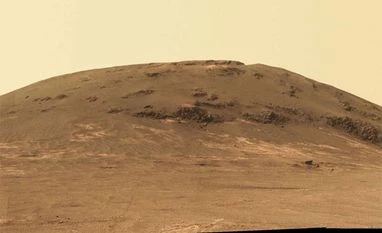 "Large solar storm sparks global aurora and doubles radiation levels on Mars")


 Connect with us on WhatsApp