Local airlines exempted from prior govt nod for code share
However, the local carriers will have to intimate the Civil Aviation Ministry as well as the DGCA 30 days before starting code share flights
Press Trust of India New Delhi Domestic airlines will no longer need prior government approval for entering into international code share pacts with foreign carriers, with the Directorate General of Civil Aviation (DGCA) relaxing the requirements in this regard.
However, the local carriers will have to intimate the Civil Aviation Ministry as well as the DGCA 30 days before starting code share flights.
Code sharing allows an airline to book its passengers on its partner carriers and provide seamless transport to destinations where it has no presence.
Coming out with a fresh set of guidelines, the watchdog said code share arrangement with an overseas carrier should be within the ambit of the bilateral Air Service Agreement (ASA) with the country concerned.
Indian carriers are free to enter domestic code share agreements with foreign carriers for any point in India if available under the respective ASA.
The DGCA said code share agreements will be disallowed if these are in violation of the ASAs.
The latest guidelines pertain to grant of permission to Indian air transport undertakings for operation of scheduled international air transport services.
In line with the government relaxing the 5/20 norm for international operations by domestic carriers, the DGCA has made necessary changes in the guidelines.
Under the new civil aviation policy, airlines that deploy 20 aircraft or 20 per cent of its total capacity for domestic operations will be allowed to fly overseas.
Earlier, only those carriers with five years of operational experience and a minimum 20 planes were permitted to operate on foreign routes.
According to the DGCA, any Indian airline will be eligible to apply for international services provided it has a valid air operator's certificate for scheduled air transport services.
Another condition is the entity should have deployed 20 aircraft or 20 per cent of total capacity (in terms of average number of seats on all departures put together), whichever is higher, for domestic operations.
In this regard, the published schedule of airlines will be the basis for monitoring, assuming that one aircraft will have six departures a day.

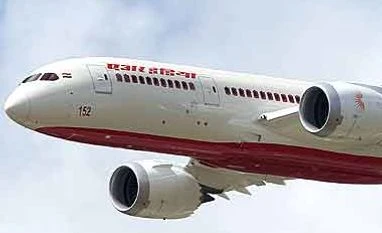 "Local airlines exempted from prior govt nod for code share")


 Connect with us on WhatsApp