Home / India News / Must review Essential Commodities Act to protect farmers' interest: Niti VC
Must review Essential Commodities Act to protect farmers' interest: Niti VC
Organic or natural farming is the sunrise sector of Indian agriculture, Kumar said, adding exports from this sector have risen significantly and have great potential for growth.
2 min read Last Updated : Nov 06 2019 | 11:44 PM IST
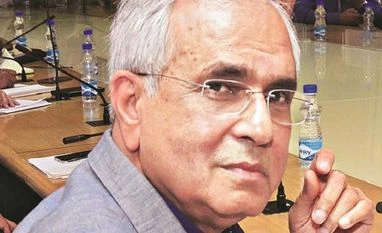
Niti Aayog Vice-Chairman Rajiv Kumar on Wednesday called for a review of regulations under the Essential Commodities Act to protect the interests of farmers and boost agriculture exports.
The Essential Commodities Act seeks to regulate the production, supply and distribution of commodities that the government declares 'essential' in order to make them available to consumers at fair prices. The list of such essential commodities include drugs, fertilisers, pulses and edible oils, and petroleum and petroleum products.
"These regulations are like a sword hanging over farm producers. They must be reviewed in the interest of farmers and the economy," Kumar said while addressing the national conference on Doubling Agri Exports, organised by the Indian Chamber of Food and Agriculture (ICFA) at National Agricultural Science Complex here.
A chief ministers' panel recently had also suggested amendments to the Essential Commodities Act (ECA) as part of steps to boost farm exports, saying the regulation should be enforced only in "extreme" cases.
Organic or natural farming is the sunrise sector of Indian agriculture, Kumar said, adding exports from this sector have risen significantly and have great potential for growth.
He urged the agricultural scientists to evaluate organic or natural farming on merit.
Addressing agricultural scientists, Kumar asked them not to dismiss this model by saying that it will lead to a drop in agricultural production or will compromise food security.
"Conduct studies and evaluate this model with due consideration. Zero Budget Natural Farming (ZBNF) will meet our food security requirements and lead to a healthier and wealthier India," he said.
Kumar also stressed that soil degradation was taking place rapidly, and organic or natural farming was the only way to reverse this.
It is essential to increase the share of ZBNF in Indian agriculture, he said, urging all farmers to examine how they can move away from the use of chemicals in agriculture and adopt zero budget natural farming practices.
"Today, India is foodgrain surplus. If we improve our post production value chain, our foodgrain surplus shall be efficiently utilized. We have to improve on labour productivity and yield in all crops, and focus on capacity building of farmers.
"Our costs must be globally competitive. We need a second green revolution to increase farmer income and double exports," said Kumar.

 "Must review Essential Commodities Act to protect farmers' interest: Niti VC")

