
Pakistan must take 'concrete action' against terrorism: Modi tells Xi
Modi's comments came ahead of Chinese President Xi's meeting with Pakistan Prime Minister Imran Khan, who is also in the Kyrgyz capital to attend the SCO summit
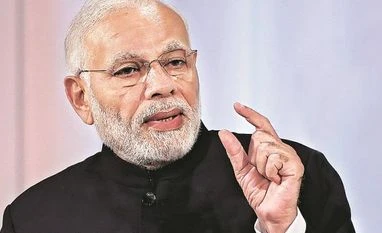 "Pakistan must take 'concrete action' against terrorism: Modi tells Xi")
WebinarsNew
Deep DiveNew
Explore Business Standard
Modi's comments came ahead of Chinese President Xi's meeting with Pakistan Prime Minister Imran Khan, who is also in the Kyrgyz capital to attend the SCO summit
Prime Minister Narendra Modi Thursday raised the issue of cross-border terrorism emanating from Pakistan during his talks with Chinese President Xi Jinping here and said India expects "concrete action" by Islamabad to create an atmosphere free of terror for the resumption of dialogue.
Prime Minister Modi met President Xi on the sidelines of the Shanghai Cooperation Organisation (SCO) Summit in Bishkek and discussed the full spectrum of bilateral relations.
This is the first meeting between the two leaders after Modi's re-election following the stunning victory of the BJP in the general elections last month.
The meeting also comes a month after the 1267 Al Qaeda Sanctions Committee of the powerful UN Security Council designated Pakistan-based terror group Jaish-e-Mohammed chief Masood Azhar as a global terrorist after China, Pakistan's closest ally, lifted its technical hold on the proposal to blacklist him.
Briefing the reporters after the meeting, Foreign Secretary Vijay Gokhale said that there was a brief discussion on Pakistan during the talks between the two leaders.
He said India has a consistent position with respect to Pakistan that it wants peaceful relations with Islamabad.
Gokhale said Prime Minister Modi told President Xi that he has made efforts to improve ties with Islamabad but these efforts have been "derailed".
"Pakistan needs to create an atmosphere free of terror, but at this stage we do not see it happening. We expect Islamabad to take concrete action" to resume talks, Gokhale quoted the prime minister as telling President Xi.
Modi's comments came ahead of Chinese President Xi's meeting with Pakistan Prime Minister Imran Khan, who is also here in the Kyrgyz capital to attend the SCO summit.
Khan has twice written to Prime Minister Modi, seeking resumption of dialogue on all issues, including Kashmir.
Responding to Khan's overtures, Prime Minister Modi told his Pakistani counterpart that creating trust and an environment free of violence and terrorism was essential for fostering peace and prosperity in the region.
India has not been engaging with Pakistan since an attack on the Air Force base at Pathankot in January of 2016 by a Pakistan-based terror group, maintaining that talks and terror cannot go together.
Early this year, tensions flared up between India and Pakistan after a suicide bomber of Pakistan-based Jaish-e-Muhammed (JeM) killed 40 CRPF personnel in Kashmir's Pulwama district.
Amid mounting outrage, the Indian Air Force (IAF) carried out a counter-terror operation, hitting the biggest JeM training camp in Balakot in Pakistan on February 26. The next day, Pakistan Air Force retaliated and downed a MiG-21 in an aerial combat and captured an IAF pilot, who was later handed over to India.
China played a role in easing tensions between New Delhi and Islamabad.
(Only the headline and picture of this report may have been reworked by the Business Standard staff; the rest of the content is auto-generated from a syndicated feed.)
First Published: Jun 13 2019 | 7:10 PM IST


 Connect with us on WhatsApp