The Supreme Court today grilled the government over the demand for revisiting its 1993 judgement that brought in the collegium system giving primacy to the Chief Justice of India in appointments to higher judiciary and wanted to know how the new Appointments Commission will not "impinge" upon judiciary's independence.
"If you are successful in showing to us that the interpretation of the nine-judge giving primacy to the CJI is wrong, you still don't succeed unless you succeed in showing that the present (NJAC) system does not undermine or impinge upon the independence of judiciary," a five-judge bench headed by Justice J S Khehar said.
"According to us your argument on nine-judge bench judgement has no meaning on the hearing of this matter," the bench said but allowed the Centre to advance its arguments on the collegium system.
The remarks were made by the bench when Attorney General Mukul Rohatgi was arguing that the issue of primacy to the CJI espoused by the nine-judge bench in the 1993 judgement does not exist in the Constitution.
The bench, which is examining the constitutional validity of the National Judicial Appointment Commission Act (NJAC), 2014 replacing the two-decade-old collegium system of appointment of judges by judges, wanted to know from the AG why he wanted to contest the nine-judge judgement when it was not the subject matter before it.
"We are not in challenge of the nine-judge judgement. At present we are on the issue of independence of judiciary and we have to protect it.
"Why don't you want to say that this (new) system is equally independent. You are not willing to show that this system is equally independent," the bench, also comprising Justices J Chelameswar, M B Lokur, Kurian Joseph and Adarsh Kumar Goel said.
"Nothing turns on this, you have to show that this ensures independence of judiciary," the bench added.
"When the 1993 judgement came and later in the Presidential Reference, Government was the first one to agree about judicial primacy. You accepted this as your final position... You can't change your position everyday," the court said.
"What is the compulsion now to change your stand... Are you saying we were wrong in 1993?" It further asked.

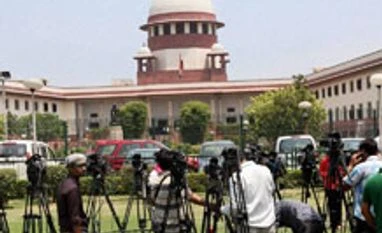 "SC questions govt on revisiting 1993 verdict on collegium")

