
SpiceJet net loss widens to Rs 463 crore on higher costs in Sep quarter
It had a net loss of Rs 389.37 crore in 2018 September quarter
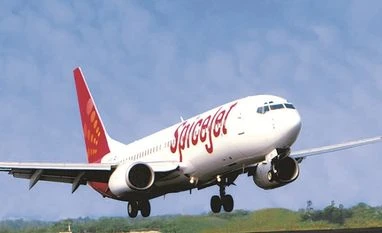 "SpiceJet net loss widens to Rs 463 crore on higher costs in Sep quarter")
WebinarsNew
Deep DiveNew
Explore Business Standard
It had a net loss of Rs 389.37 crore in 2018 September quarter
SpiceJet on Wednesday reported widening of net loss to Rs 462.58 crore in the September quarter as higher costs related to grounding of Boeing 737 MAX planes and changes in accounting norms bogged down the no-frills carrier.
With 13 MAX aircraft on the ground, the airline has initiated the process of seeking reimbursements and claims from Boeing and expressed hope about a 'favourable outcome'.
In a release, SpiceJet said the net loss of Rs 462.58 crore in the latest September quarter was mainly on account of inflated costs with respect to MAX grounding and a seasonally weak quarter. The figure includes a "loss of Rs 180.3 crore on account of accounting standard Ind AS 116".
Indian Accounting Standard 116 or Ind AS-116 has come into force from April 1. It pertains to principles for recognition, presentation and disclosure of leases. Airlines mostly opt for sale and lease back of planes. It had a net loss of Rs 389.37 crore in 2018 September quarter.
However, the airline's total income jumped to Rs 3,073.50 crore in the second quarter of the current financial year from Rs 1,902.08 crore in the same period a year ago. Operating revenue rose to Rs 2,845.3 crore in the second quarter of the current fiscal from Rs 1,874.8 crore in the same period a year ago.
"With the grounding of Boeing 737 MAX, the company continues to incur various costs and losses with respect to these aircraft. The company is in the process of determining the costs and losses (including opportunity losses) incurred by it and has initiated the process of seeking reimbursements and claims from the aircraft manufacturer," the release said.
Earlier this year, SpiceJet grounded 13 MAX planes after a worldwide grounding of such aircraft in the wake of two deadly crashes.
Based on its own assessment and legal advice, SpiceJet said the management is confident of a favourable outcome with regard to the reimbursements and claims. SpiceJet Chairman and Managing Director Ajay Singh said continued grounding of the 737 MAX has hit growth plans adversely and resulted in inefficient operations and as a result increase in costs.
According to him, the likely return to service of the 737 MAX early next year and as indicated by Boeing recently, would mean that the airline has at its disposal more than 25 brand new planes.
"The return of the 737 MAX will provide a huge boost to our operations and we are confident that with the rigorous scrutiny, the MAX will be one of the safest airplanes ever to fly," he added.
Regarding the latest quarterly result, Singh said the impact of the industry's growth rate slowing down in the past few months is evident on the bottom line.
The carrier has a fleet of 118 planes and on an average operates 630 flights daily. Shares of SpiceJet declined over 1 per cent to close at Rs 113.70 apiece on the BSE.
First Published: Nov 13 2019 | 7:25 PM IST


 Connect with us on WhatsApp