Tech parameters at KNPP enhanced post Fukushima disaster
He said the atomic power plant in south India was Generation 3 plus which takes into account the Fukushima event
Press Trust of India Moscow Certain technological parameters have been enhanced at the Kudankulam Nuclear Power Plant (KNPP) in Tamil Nadu to increase its safety standards following the Fukushima disaster in Japan, a senior Russian official has said.
Vladimir A Angelov, Director for Projects in India, State Atomic Energy Corporation ROSATOM said, " although these were serious modifications, the price of the contract remains unchanged."
Speaking to select Indian journalists on the sidelines of the world nuclear conference ATOMEXPO 2016 here recently, while discussing about a range of issues relating to KNPP, he said the atomic power plant in south India was Generation 3 plus which takes into account the Fukushima event.
"We have enhanced certain technological parameters in units 3 and 4 taking into account Fukushima lessons, specifically the seismic parameters. Although these are quite serious modifications the price of the contract remains unchanged," he said.
While the Indian side had requested the Russian experts to review the possibility of enhancing certain parameters, we also undertook the effort of analysing and enhancing them, he said.
"So power units 3 and 4 are designed for a higher seismic climatic and technical impact," he informed.
Asked if units 1 and 2 were post-Fukushima compliant, he said , "It is one protection for whole NPP. So the protection of the first and second power units will also be improved taking into account the improvements done at power units 3 and 4."
"And we have started the designing of units 5 and 6 also taking into account the new events. For example, the hydraulic structures of power units 3 and 4 are designed taking into account the design of future power units 5 and 6 and the new requirements," he added.
However, units 1 and 2 were fully compliant with the post-Fukushima lessons, he said.
Japan's Fukushima nuclear power station located in the Pacific Ocean coast received huge damage by the earthquake and tsunami in March 2011. It was the largest nuclear disaster since the Chernobyl disaster of 1986.
As regards operations at KNPP, there were about 10 shift supervisors with relevant experience in the first unit and it is going to be the same in power units 2,3 and 4, he pointed out.
The Indian side approves operators after checking their qualification and such persons have high qualification of 30 years of having worked with the VVER design, being used in KNPP, he said.
On the second unit, which is expected to start commercial operations this month, Angelov said, " the scientists entered its commissioning already knowing certain problems in unit 1 and therefore, we are doing all the startups and adjustments at the power unit 2 in accordance with the schedule and being aware of the risks."
"We plan to connect it to the grid in the second half of July. Now, the works are being performed in strict compliance of the schedule and some of works are even ahead of schedule," he quoted.
One of the achievements was that of loading of fuel-163 fuel assemblies, in a very short time even compared to Russian NPPs, he said.
For instance, in the case of the NPP at Novovoronezh in Russia, fuel loading lasted for 10 days while at KNPP it took eight days which is very good, he added.

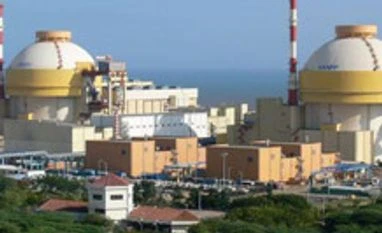 "Tech parameters at KNPP enhanced post Fukushima disaster")


 Connect with us on WhatsApp