Are fears of Raghuram Rajan's exit overdone?
Rockstar Rajan's exit will be a temporary blow, not a permanent one
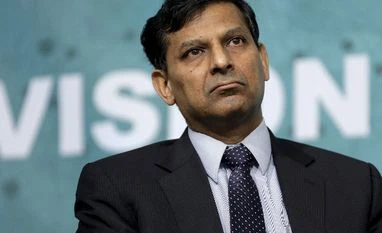
Anupam Gupta On Twitter, it’s already got its own hashtag – #RRexit. The possible exit of RBI Governor, Raghuram Rajan, after his first term is cause for much debate. He has plenty of support on his side. As Business Standard
reported, "at least seven online petitions doing the rounds in support of a second term for him and have together garnered nearly 60,000 signatures so far."
Everyone loves Governor Rajan. From domestic to global fund managers, from mainstream media in India to foreign press, the support for Rajan is widespread. Famed fund manager, Mohamed El-Erian was quoted as saying “He (Rajan) is rightly deemed as one of the very best central bank governors in the world.” Rajan has also become an underdog of sorts since he became the target of a vicious, ill-informed, and poorly supported campaigns of assorted right-wing trolls. The anti-Rajan campaign revels in conspiracy theory and has no substance in its allegations. Press reports on Rajan’s appeal to the Modi Government are varied. Some reports claim Modi loves him, some claim otherwise.
What has fueled these rumors of Rajan’s potential exit? In all probability his outspoken statements that indicated that he has nothing to lose any more. It started late last year when Rajan spoke out against intolerance. More recently, he made the now famous statement comparing India’s growth in a stagnant world to the one-eyed king in the land of the blind. When was the last time you heard an RBI Governor make such bold statements and speak out strongly on matters other than monetary policy? When was the last time an RBI Governor’s appeal cut across sections?
Till Rajan arrived, the only use of a RBI Governor, from the market’s perspective, was to tweak policy rates and make boring statements on inflation, GDP growth, and monetary policy. In Rajan, however, the market got a rockstar (as Rajan is often called). Remember the rousing response from equity markets when Rajan took charge? From 30th August 2013 to 11th Sept 2013, the Nifty rose 8%. And Rajan went beyond speeches. He opened up India’s banking sector to competition by ushering in payment banks, he was instrumental in getting banks to own up to bad loans – and all of this was much after he played a key role in rescuing India from the current account deficit crisis of 2013. All this from a man who was also prescient about the global financial crisis. No wonder then that markets have rightly gotten attached to Rajan. All of this attachment is justified.
What is not justified, however, is the prevailing fear surrounding his exit. Some experts have called for a mass exit of foreign investors from Indian markets, if Rajan isn’t given a second term. These fears are as daft as the allegations against Rajan. I heard similar fears when the Satyam scam broke out in 2008 and, more recently, when the Government signed the amendment to the Mauritius tax treaty. Such alarmist proclamations sound good on news media but are often proved wrong. While markets – and foreign investment – did take a hit after the Satyam scam, we all know how strongly they recovered eventually.
After the Mauritius amendment, equity markets not only refused to panic but, instead, climbed to new 2016 highs in the next few weeks. What does this tell you? Markets move on. They recover, they accept and adapt to new realities. There is no doomsday, there is no end of foreign investment.
And this will play out later this year. If Rajan is not given a second term, markets will take a hit. In all probability, a few short-sighted FIIs who think that India is controlled by one person, will panic and exit. But that will not be the end of India. There will not be a mass exit, an end-of-the-world exodus of all FIIs from Indian markets. Eventually, markets will accept the new reality and place bets on India’s future.
So, take all these doomsday scenarios with a pinch of salt. Indian markets have been through panics, fears, chaos, and collapse – all of which have provided opportunities. FII flows have waxed and waned in response. But markets continued to trade, and India will remain a compelling theme for any investor. Even Rajan would agree that institutions outlast individuals. And the RBI would only be a stronger institution because of Rajan.
Anupam Gupta is a Chartered Accountant and has worked in equity research since 2000, first as an analyst and now as a consultant. He contributes to the Business Standard platform,
Punditry, through his blog,
Beyond Markets on markets & the economic horizons.

 "Are fears of Raghuram Rajan's exit overdone?")


 Connect with us on WhatsApp