
Banking system vulnerable to financial contagion, says RBI's FSR
That means trouble at a single bank among the top five most connected lenders could lead to contagion that wipes out nearly 50% of Tier I capital
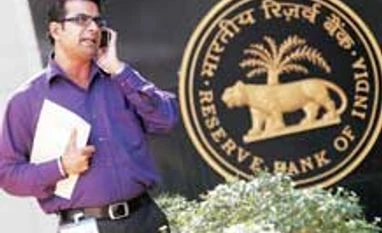 "Banking system vulnerable to financial contagion, says RBI's FSR")
WebinarsNew
Deep DiveNew
Explore Business Standard
That means trouble at a single bank among the top five most connected lenders could lead to contagion that wipes out nearly 50% of Tier I capital
The country's close ties between lenders would leave the banking system especially vulnerable to contagion in case of trouble at a single institution, the Reserve Bank of India (RBI) warned in a report on Monday.
That means trouble at a single bank among the top five most connected lenders in India could lead to contagion that wipes out nearly 50 percent of Tier I capital in the banking system under a severe stress scenario, the RBI said in its semi-annual Financial Stability Report.
"This underscores the importance of monitoring not just interconnectedness, but also the counterparties and magnitude of exposure involved in the connection," the RBI said.
The central bank did not identify the top five banks used for its study. It said its stress tests involved conditions such as potential failure by a bank that is either a net lender, a net borrower, or both.
The RBI also used money markets as one of its variables for stress tests given banks frequently lend to each other in short-term maturities.
India's non-banking financial firms (NBFC) also pose a risk to the banking system due to their close ties with banks, the RBI warned in the report.
This so-called shadow banking system is worth $190 billion in India, ranking it third largest among BRICS countries and 15th in the world, the RBI said.
BRICS is a frequently used acronym that refers to Brazil, Russia, India, China and South Africa.
Turning to other risks in India's financial system, the RBI highlighted the need for "closer examination" of the practice of promoters who pledge a substantial portion of company shares to get loans.
Still, overall, the RBI noted it expected the level of bad levels to steadily come down, estimating the ratio of gross non-performing loans to total assets would decline to 4 percent by March 2016 from 4.5 percent at the end of September 2014 under its baseline scenario.
But under its "severe stress" scenario that ratio would rise to around 6.3 percent by March 2016, the RBI said.
First Published: Dec 29 2014 | 5:28 PM IST


 Connect with us on WhatsApp