Global economic growth will be "disappointing" next year, the head of the International Monetary Fund (IMF) said in a guest article for German newspaper Handelsblatt published on Wednesday.
IMF Managing Director Christine Lagarde said the prospect of rising interest rates in the United States and an economic slowdown in China were contributing to uncertainty and a higher risk of economic vulnerability worldwide.
In addition, growth in global trade has slowed considerably and a decline in raw material prices is posing problems for economies based on these, while the financial sector in many countries still has weaknesses and financial risks are rising in emerging markets, Lagarde added.
"All of that means global growth will be disappointing and uneven in 2016," Lagarde said, adding that low productivity, ageing populations and the effects of the global financial crisis were putting the brakes on growth.
She said the start of normalisation of U.S. monetary policy and China's shift towards consumption-led growth were "necessary and healthy" changes but needed to be carried out as efficiently and smoothly as possible.
The U.S. Federal Reserve hiked interest rates for the first time in nearly a decade earlier this month and made clear that was a tentative beginning to a "gradual" tightening cycle.
There are "potential spillover effects", with the prospect of increasing interest rates there already having contributed to higher financing costs for some borrowers, including in emerging and developing markets, Lagarde said.
She added that while countries other than highly developed economies were generally better prepared for higher interest rates than they had been in the past, she was concerned about their ability to absorb shocks.
"Most highly developed economies except the USA and possibly Britain will continue to need loose monetary policy but all countries in this category should comprehensively factor spillover effects into their decision-making," Lagarde said.
She warned that rising U.S. interest rates and a stronger dollar could lead to firms defaulting on their payments and that this could then "infect" banks and states.

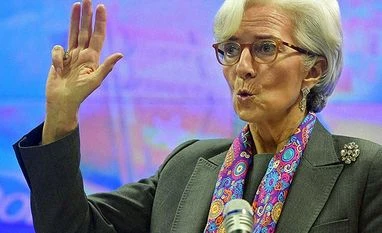 "Global growth will be disappointing in 2016: IMF's Christine Lagarde")


 Connect with us on WhatsApp