
Japan's economy may have posted 2nd best stretch of post-war growth
The index of coincident economic indicators rose a preliminary 1.9 points to 117.6 in August from the previous month, the level seen in March 2014
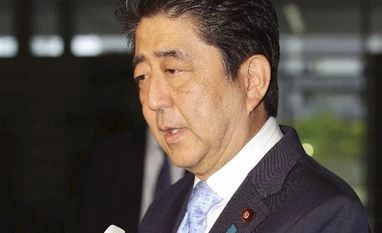 "Japan's economy may have posted 2nd best stretch of post-war growth")
Explore Business Standard
The index of coincident economic indicators rose a preliminary 1.9 points to 117.6 in August from the previous month, the level seen in March 2014
Japan's economy likely posted its equal second-best stretch of uninterrupted post-war growth, a government index for August showed on Friday, a nod to strong global demand and premier Shinzo Abe's aggressive stimulus measures.
The latest reading comes as Abe heads to a general election later this month and puts his "Abenomics" policies in the spotlight. However, despite the strong headline number, analysts say the benefits of growth have failed to reach broader sectors of the economy with generally anaemic wages leaving households behind.
The index of coincident economic indicators rose a preliminary 1.9 points to 117.6 in August from the previous month, the level seen in March 2014, the Cabinet Office said. This would mark 57 straight months of growth, matching the second-best stretch of expansion since World War Two, seen between 1965 to 1970.
"I don't feel the economy has been growing and I'm not in a mood to spend on luxury things. I need to save money for my child's education and for when I retire as I don't think I will get enough pension to make ends meet," said Satoko Sakuma, 57 years old, a part-time worker in the elderly care industry.
The coincident index is used to measure the state of the economy and is among indicators the government uses when deciding whether the economy is expanding or in recession. It includes a range of readings such as factory output, employment and retail sales.
Under the government's definition, the economy has been in an expansion since December 2012, when Abe came into office. The economy posted its best stretch of consecutive monthly growth of 73 months from February 2002 to February 2008.
Japan's economy expanded at an annualised 2.5 per cent in the second quarter as consumer and company spending picked up, with steady growth likely to be sustained in coming quarters.
But while there has been some economic momentum, it remains historically modest: the economy grew an average 1.2 per cent during the current expansion, much slower than 11.4 per cent average growth during the 1965 to 1970 expansion, SMBC Nikko Securities said.
Other data on Friday showed Japanese workers' wages rose in August from a year earlier in a sign of a gradual pick-up in household income.
And a Bank of Japan survey showed households' mood improved in September from three months ago, though fewer of them expected prices to rise a year from now.
The jobless rate, which was at 4.3 per cent when Abe took office, fell to 2.8 per cent in August. Corporate earnings rose 75 per cent during the period, as the yen fell more than 30 per cent and the Nikkei stock average doubled in value.
"Companies have enjoyed record profits but wages aren't growing much," said Hidenobu Tokuda, senior economist at Mizuho Research Institute.
"Most of the increase in corporate profits came from factors like falling oil costs and a weak yen, and the recovery in sales wasn't as strong as past economic expansions. This is making companies cautious of raising wages."
Some economists say companies may keep hoarding cash as they see little growth prospects in Japan's rapidly ageing society.
"It's hard to predict the future so companies tend to save cash. They can't raise prices as they may lose customers," said Yoshiki Shinke, chief economist at Dai-ichi Research Institute.
"It would be better if the economy sees growth stabilise above its potential."
First Published: Oct 06 2017 | 5:54 PM IST


