
OPEC cuts 2016 oil demand growth forecast, warns of more
In its report, OPEC said that economic developments in Latin America and China are of concern
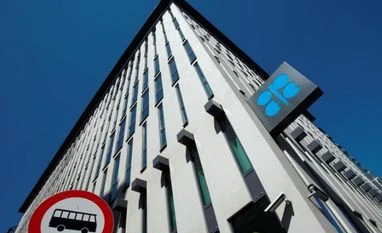 "OPEC cuts 2016 oil demand growth forecast, warns of more")
WebinarsNew
Deep DiveNew
Explore Business Standard
In its report, OPEC said that economic developments in Latin America and China are of concern
The Organization of the Petroleum Exporting Countries also said top exporter Saudi Arabia kept output steady in March - a sign Riyadh is serious about a plan to be discussed this weekend to freeze output and support prices - while OPEC supply overall rose only slightly.
World demand will grow by 1.20 million barrels per day (bpd) in 2016, OPEC said in its monthly report, 50,000 bpd less than expected previously.
It also cited the impact of warmer weather and the removal of fuel subsidies in some countries.
"Economic developments in Latin America and China are of concern," OPEC said. "Current negative factors seem to outweigh positive ones and possibly imply downward revisions in oil demand growth, should existing signs persist going forward."
OPEC's view contrasts with that of the US Energy Information Administration, which on Tuesday raised its demand forecast slightly.
A third closely watched oil report, from the International Energy Agency, is due on Thursday.
A big slowdown in demand could complicate producers' efforts to bolster prices by freezing output. The plan, to be discussed on Sunday in Doha, has helped oil prices to rally above $41 a barrel from a 12-year low close to $27 hit in January.
OPEC's refusal to cut output in late 2014 helped accelerate a drop in prices, which is slowing the development of relatively expensive rival supply sources such as US shale oil and other projects worldwide.
In its report, OPEC said it expected supply from outside the group to fall by 730,000 bpd this year, more than the 700,000-bpd drop expected previously. But it reiterated that producer efforts to maintain output were making the forecast uncertain.
Despite the slightly larger non-OPEC decline expected, OPEC projects demand for its crude will average 31.46 million bpd in 2016, down 60,000 bpd from last month's forecast.
The 13-member group pumped 32.25 million bpd in March, the report said citing secondary sources, up 15,000 bpd from February.
Saudi Arabia told OPEC it kept output in March steady at 10.22 million bpd. Riyadh in February struck a preliminary deal with fellow OPEC members Venezuela and Qatar, plus non-OPEC Russia, to freeze output.
Iran, which wants to regain market share after the lifting of Western sanctions on Tehran rather than freeze output, told OPEC it raised output by a minor 15,000 bpd to 3.40 million bpd.
The report points to a 790,000-bpd excess supply in 2016 if the group keeps pumping at March's rate, up from 760,000 bpd implied in last month's report.
First Published: Apr 13 2016 | 6:30 PM IST


 Connect with us on WhatsApp