
Qatar Petroleum plans to invest $20 billion in US in major expansion
Qatar Petroleum is majority owner of the Golden Pass LNG terminal in Texas
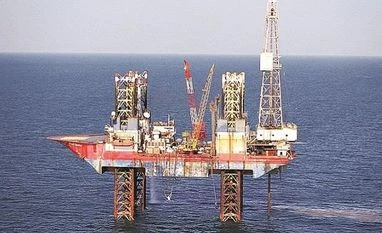 "Qatar Petroleum plans to invest $20 billion in US in major expansion")
Explore Business Standard
Qatar Petroleum is majority owner of the Golden Pass LNG terminal in Texas
Qatar Petroleum (QP) is looking to invest at least $20 billion in the United States over the coming few years, its chief executive told Reuters, after the Gulf Arab state unexpectedly quit OPEC this month.
Saad al-Kaabi, who holds the energy portfolio of the world's top liquefied natural gas (LNG) supplier, also said on Sunday the company aimed to announce foreign partners for new LNG trains needed for an ambitious domestic scale-up by the middle of next year, but was keeping open the possibility of going it alone.
Qatar, a tiny but wealthy country is one of the most influential players in the LNG market due to its annual production of 77 million tonnes. It plans to boost capacity 43 percent by 2023-2024 and will be building four liquefaction trains for the LNG expansion.
As part of its more than $20 billion investment push in the U.S. QP is looking "at gas and oil, conventional and non-conventional," Kaabi said.
Qatar Petroleum is majority owner of the Golden Pass LNG terminal in Texas, with Exxon and ConocoPhillips holding smaller stakes.
Kaabi said he expected to make a final decision on that investment and whether to move ahead with the project "by the end of the year, if not January."
Qatar is a relatively small oil producer compared to its massive gas production. Its decision to quit OPEC this month was seen as a swipe at the group's de facto leader Saudi Arabia, which along with the United Arab Emirates, Bahrain and Egypt, has imposed a political and economic boycott on Qatar since June 2017, accusing it of supporting terrorism, which Doha denies.
Kaabi said that proposed U.S. legislation known as "NOPEC", or No Oil Producing and Exporting Cartels Act, which could open the OPEC group up to anti-trust lawsuits, was among the reasons for quitting the oil exporting club.
Qatar Petroleum announced separately on Sunday that it was partnering with Italian oil major Eni on three oil fields in Mexico, taking a 35 percent stake in deposits that will begin production in mid-2019 and ramp up to about 90,000 barrels per day by 2021.
The company is in talks with international oil firms about the LNG expansion project at home, including Eni, Kaabi said. Other partners already operating in Qatar include Exxon Mobil Corp, Total, Royal Dutch Shell and ENI.
QP said it will self-finance the LNG expansion rather than borrow, a shift from previous practices where it used lenders to fund up to 70 percent of project costs.
Kaabi said it could carry out the expansion alone if no good offers from foreign firms were made.
"We are looking for a lot of things (in our partners) including asset swaps, things that will help me in my international expansion," he said.
"If I don't get good deals, nobody will come."
The company currently pumps 4.8 million barrels of oil equivalent per day (boed) and aims to boost its output to 6.5 million boed in the next 8 years by expanding its upstream business abroad.
(Reporting by Eric Knecht, Rania El Gamal and Dmitry Zhdannikov; Editing by Mark Potter and Elaine Hardcastle)
First Published: Dec 16 2018 | 8:23 PM IST

