Punjab's SMEs suffer on weak rupee
The weakening of the rupee has resulted in higher rupee realisations for exporters, but it might also turn into a disadvantage
Komal Amit GeraVijay C Roy Chandigarh As a result of the steep fall in the value of the Indian rupee against the dollar, Punjab's small and medium enterprises (SMEs) are faced with large losses.
Punjab has several textile companies - in yarn manufacture and garment-making - that export to a number of countries across the world. The state also has a significant number of leather, engineering goods and sports goods exporters.
The weakening of the rupee has resulted in higher rupee realisations for exporters, but it might also turn into a disadvantage.
Leading exporters from Punjab's textile companies told Business Standard that gains from the depreciating rupee would be a short-term phenomenon, and would lead to cost escalation for them in the long run.
According to J L Sharma, managing director of the Ludhiana-based Vardhman Group, the price of cotton might not be affected, as cotton is a natural fibre, but the cost of man-made fibre would increase.
"Most of the man-made fibre is manufactured from chemicals imported by the large players. The falling rupee implies an increase in the cost of imported material. The price increase is irreversible, so the input costs of yarn manufacturers will increase. But companies which are purely into garment manufacturing may not face the adverse implications of this," he said. During such uncertain conditions, small players are at a higher risk, he added.
V K Goyal, executive director and group chief executive officer of SEL Manufacturing Company Limited, a vertically integrated textile player based out of Punjab, said that since most of their exports are dollar-denominated, there is an increase in margins, but this will not last long. He said buyers and sellers make price adjustments in the long run, and so the gains vanish.
Ludhiana is dotted with hundreds of small and micro players who are mainly garment makers. "The short-term gains are not passed on to us by the large textile companies," said a small-scale garment maker in Ludhiana. Large players have the benefit of instruments like hedging and forward bookings, but small units are staring at huge losses, he added.
Piara Lal Seth, a shawl exporter from Amritsar, said, "When we talk about SME exporters, only those exporters benefit who are into direct exports. The majority of SME exporters can't afford to have their own export house, so they export through middlemen. They do not benefit, because the middlemen eat a large chunk of profits, leaving the SMEs high and dry."

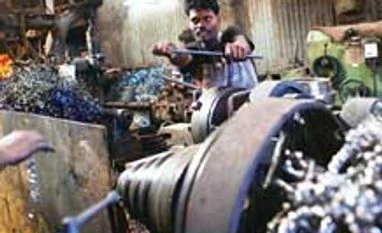 "Punjab's SMEs suffer on weak rupee")


 Connect with us on WhatsApp