US varsity crafts business plan for Tirupur exporters
This is perhaps the first time Indian SMEs have associated with a university in an export market to boost the reach of their products
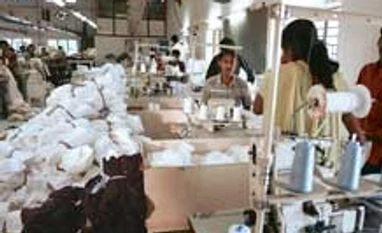
T E Narasimhan Chennai Exporters from the Rs 18,000-crore knitwear industry in Tirupur, mostly comprising small and medium enterprises (SMEs), have joined hands with America's Bradley University to develop a business plan to increase their market presence in the US.
This is perhaps the first time Indian SMEs have associated with a university in an export market to boost the reach of their products.
The strategy was developed by Rajesh Iyer, an associate professor of marketing and director of the international business programme at Foster College of Business, Bradley University, Illinois, and his Executive MBA students.
A list of recommendations was developed after the students gathered primary and secondary data from potential and existing customers, conducted market research to understand the customer, and performed analyses relating to competitor overviews, mode of entry, and marketing strategies, Iyer said.
The recommendations cover three areas: Technology and infrastructure exploration; image management; and market discovery.
Under the first, exporters have been asked to continue to improve infrastructure to further support production; assess the growth of China's infrastructure and begin to work with local government officials to adapt relevant improvements; continually update technology to further diversify and increase product value; identify additional opportunities through the study of competitors, retailers, and customers; and balance export and domestic revenue channels.
Under 'image management', exporters have been asked to establish a small office of the Tirupur Exporters' Association (TEA), using marketing representatives, in a prime location of the US and join supplier diversity councils to gain access to opportunities; and to establish connections with wholesalers, retailers and brands.
Under 'market discovery', exporters have been asked to increase capacity through investing in the infrastructure of competitors (through outbound foreign direct investments); utilise current, former and perspective customers, including US-based apparel consultants and buyers, to gather feedback, and retool branding and marketing accordingly; participate in trade shows to maximise networking opportunities and increase awareness of the TEA brand; advertise in textile and sourcing journals and publications; and join the US fashion industry association and partner with it at trade shows to gain access to top executives.
Iyer said that Indian SMEs could serve as contract manufacturers for US firms. In some instances, where companies from the US are looking for a presence in the Indian market, they may consider the licensing option with Indian SMEs and, in some cases, joint ventures. This will depend on the size of the firm and the resources it is willing to commit to the Indian market.
US firms are typically skeptical about relationships with Indian companies as there are issues of control and the fear of losing their technology to Indian firms, which warrants close monitoring on intellectual property rights, he said.
Iyer said enhancing the efficiency and reliability of India's transportation infrastructure - rail, roads and ports - is a key challenge for Indian SMEs. He suggested that the sector should look at China's infrastructure modernisation and move towards privatisation.
He cautioned that small competitors such as Vietnam and Cambodia are beginning to improve their infrastructure, which could threaten India's competitive position. To reduce this potential risk and advance as the leader in exports, India would benefit by improving the transportation infrastructure and reducing supply chain risks, he said.

 "US varsity crafts business plan for Tirupur exporters")


 Connect with us on WhatsApp