Latin American economies suffer from “the curse of El Dorado”: they have the resources but development eludes them. Sri Lanka and Pakistan seem fated to become South Asia’s El Dorados. Their economies were already shaky when the coronavirus pandemic exacerbated the crisis.
Between 2019-20 and 2021-22, India’s domestic and foreign debt increased by 35 per cent. In the same period, Sri Lanka’s gross borrowing increased 33 per cent and Pakistan’s by 30 per cent — both countries are drowning in debt.
Sri Lanka is scheduled to hold talks this month with the International Monetary Fund (IMF) for loans. While India’s debt-to-GDP ratio was 74.1 per cent in 2019-20, Sri Lanka’s was 86.8 per cent. Pakistan had a ratio of 87.6 per cent in 2019. Debt servicing in Sri Lanka and Pakistan accounted for 7.65 per cent and 4.02 per cent of national incomes, respectively, in 2019, while India’s made for 1.8 per cent.
Sri Lanka’s problems are blamed on economic policies before and during the coronavirus pandemic. The economy was suffering from a slump in tourism when President Gotabaya Rajapaksa’s government announced tax cuts before the pandemic. Tax revenues declined as a result of this when remittances were slowing and the trade balance was widening.
Data from Sri Lanka’s central bank shows that the country lost nearly half of its foreign currency reserves between February 2020 and February 2021. Another half was obliterated by February 2022. By the end of February 2022, the gold held by its central bank had declined three-fourths.
Sri Lanka’s government in 2021 went fully organic in agriculture to save on fertiliser subsidies — a step that added to the woes. It depressed agricultural yields, worsening the crisis.
The Sri Lankan rupee has depreciated nearly 50 per cent since last year. Against the dollar, it was Rs 300 on April 1.
The structural issues pre-date the Rajapaksa dispensation. Sri Lanka’s debt started piling up in 2012 and increased ten percentage points within four years. The debt servicing costs started rising from 2013.
Meanwhile, subsidy outgoes kept on increasing. Ultimately, as the proverb goes: For want of a nail, the kingdom was lost.

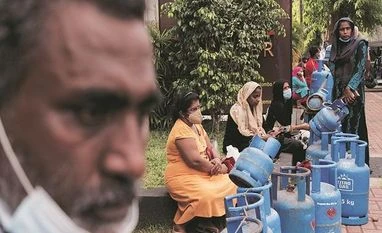 "BS Number Wise: From bad to worse, tracking Sri Lanka's economy")











