Grofers stands to gain in another way — by being able to push its private labels. Today, about 15-20 per cent of the stocks of these kirana stores comprises Grofers’ labels. “The more they sell, the more margins we make and we are creating more brand visibility for ourselves.”
The company wants more stores to stock its private labels but has no projections as far as the revenue from these offline stores is concerned.
Integrating kiranas in some way is a strategy being considered — or even employed — by most modern retailers, including Amazon. So what happens when those with deeper pockets and with a far bigger store footprint become more aggressive in this area? Kumar remains unfazed, and there is a good reason for that. As Devangshu Dutta, CEO at consultancy firm Third Eyesight, points out, the numbers targetted by Grofers — 1,000 stores — is a drop in the ocean. In other words, there's a huge market to be conquered. However the company, he adds, should aim to increase volumes rapidly and look for dominance in select geographies. “You have to acknowledge you cannot dominate everywhere,” he sums up the challenge for Grofers.
Newer grounds

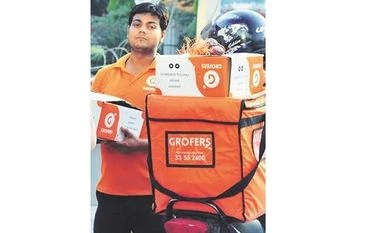 "How Grofers is roping in kirana stores in fight against hard discounters")










 Connect with us on WhatsApp