The diamond industry in India has lost its sparkle in recent years. Dampened by a weakened consumer demand, depreciating rupee and rising labour costs, companies are struggling for survival.
One such company to hit the headlines is the 110-year-old Shrenuj, thanks to its mounting debt. Banks with a combined exposure of over Rs 3,000 crore have obtained an order from the Debt Recovery Tribunal to repossess its stock of diamonds and restrict travel of its promoters.
With lenders tightening the screws on the company, its promoters have been left scrambling for a debt recast deal. They have pledged a part of their shares to banks and are making a last-ditch effort to “resolve the matter in an amicable way in the quickest possible time.”
Over the past year, the promoters have pledged almost three-fourths of their stake to banks, and their equity in the company has fallen from 53.79 per cent in the December quarter to 41.88 per cent in the June quarter.
Losing glitter However, the problems facing Shrenuj, which has survived across four generations, are not isolated. The diamond industry’s woes started about three years ago, primarily stemming from a dip in demand for polished diamonds globally.
“Things were going very well till 2012, even though some froth in demand was seen due to several diamond-jewellery retail chains springing up globally, especially led by Chinese companies,” says Dinesh Navadia, president of the Surat Diamond Association.
Then, the demand from China boomed, pushing up the price of raw materials worldwide. “During the heydays, a single piece of rough diamond was traded four times a day in India and the price would go up with each deal,” says Navadia. However, the demand from Chinese purveyors stopped once they had stocked enough inventories for the future, throwing the Indian industry out of gear.
Further, despite the tepid demand, the price of raw materials has continued to soar, even as that of polished diamonds has remained muted. So, while companies are paying more for the raw material, their returns have not improved.
The depreciation of the rupee in the second half of 2013 only added to the industry’s woes. For diamond jewellers, working capital limits for a year are fixed in rupee terms based on their previous year’s exports. A weakened rupee crimped their working capital limit, forcing the industry to borrow in US dollars to meet its raw material cost.
Shrenuj & Company, for example, lost over Rs 250 crore in sanctioned limits over the past three years. The lower limits along with an increase in the cost of raw materials led to a serious cash flow crunch and the company started to default on its loan commitments.
Several of its accounts have been declared sub-standard, or where interest or premium has remained unpaid for a quarter, and banks have initiated the legal process to recover their dues.
A short-term blip Shrenuj Chairman & Managing Director Shreyas Doshi says the company’s current problems will blow over soon. “It is a temporary situation and we will overcome it. We have seen several business cycles over the company’s life, and this will not significantly affect the overall working of the company.”
“The banks’ actions relate to one of the many subsidiaries of the Shrenuj group and its listed entities are not affected as a result. We are challenging this ex-parte order and taking remedial measures,” he adds.
Meanwhile, to safeguard the interest of its over 8,000 shareholders and 2,000 employees, the company has consolidated its operations and scaled down its unproductive businesses. The company’s share has pared over 90 per cent of its value over the past year. It closed at Rs 2.41 on the Bombay Stock Exchange on Wednesday.
As part of its revival strategy, the company has also rationalised its workforce. “Manufacturing will continue with low capacity utilisation and we are considering alternative strategies to overcome the current challenges,” says Doshi. Among his plans is an increased focus on the group’s trading business which accounts for 40 per cent of its total revenue.
Experts say liquidity crunch is a major problem for the industry and it needs urgent attention from the government as banks have started to reduce their exposure to the sector. In June, Standard Chartered shut down its $2 billion diamond-financing business globally, saying it was beyond the bank’s new “risk tolerance”, reported The Economist.
Bruce Cleaver, CEO of De Beers Group, a global diamond mining leader, however told Business Standard that “some other banks are coming up to finance diamond business.”
To tide over the financial crunch, the industry wants the government to reduce import duties on gold jewellery to enable it to compete with Dubai which has emerged as a regional gold hub because of its tax-free business regime.
The government has taken some steps to help the industry, but more needs to be done. To curb speculative trading, for example, it has created a framework for trading and auctioning of rough diamonds.
This along with early signs of revival in global demand is lending some optimism to the industry. “Markets like Europe and China are bottoming out, indicating the worst for the diamond industry is over. Also, India’s biggest market for gems and jewellery, the US, has seen an improvement, and experience suggests that in an election year demand for such products increases,” says Praveen Shankar Pandta, chairman of the Gems and Jewellery Export Promotion Council. The US accounts for 45-50 per cent of India’s gems and jewellery exports.
Will the revival in demand help Shrenuj? Experts say its fortunes will depend on the approach banks decide to take on the debt recovery process.

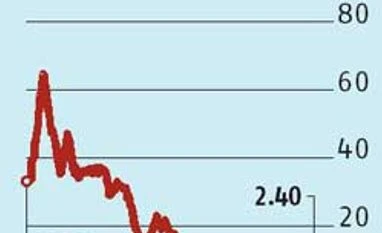 "Shine is off Shrenuj as future hangs in balance")


 Connect with us on WhatsApp