India may be a part of global 6G standards development process: Report

DoT Secretary K Rajaraman said that the government expects the scale and scope of 6G technology to be finalised worldwide by 2023-24
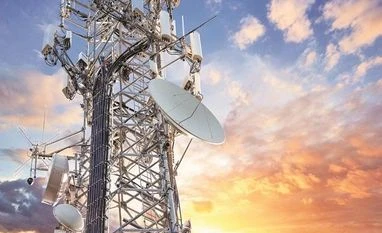
DoT, Department of Telecommunication
BS Web Team New Delhi
2 min read Last Updated : Nov 25 2022 | 11:15 AM IST
Indian may soon become a part of the global 6G standards development process. The Centre hopes that the recently launched research & development fund will provide appropriate support to early-age startups, a report in the Economic Times (ET) said. 

The Centre launched the Telecom Technology Development Fund scheme earlier in 2022 to support startups involved in the design, development and commercialisation of applications based on 5G and 6G. To get funding under the programme, the startups will have to submit their proposals to the Department of Telecommunications (DoT) latest by December 31. This deadline was November 15 earlier. 

DoT Secretary K Rajaraman was quoted by ET as saying that the government expects the scale and scope of 6G technology to be finalised worldwide by 2023-24. 

At the India Mobile Congress on October 2, telecom minister Ashwini Vaishnaw said that much of the technology required for the development of 6G is available with Indian developers and the country will lead in the next-generation technology space.

He said that prime minister wants India to take the lead in 6G.

"We have to be leaders in 6G. That is the goal for which we will work and achieve," Vaishnaw said.

According to the DoT, 5G technology is expected to deliver ten times better download speed than that of 4G and up to three times greater spectrum efficiency.

IIT Hyderabad professor Kiran Kuchi, who is heading the 6G development project in India, said that the institute has been granted some of the patents that will help create 6G standards and the process is on to apply for new patents as the technology advances.

"A normal cell site (mobile station) is divided into 3 sectors or zones. In 6G we are seeing there will be a single large cell with no sectors. It will be connected to a supercell. There will be multiple radios on a single cell which will enhance spectral efficiency as well as network speed," Kuchi said.

(With agency inputs)

One subscription. Two world-class reads.

Already subscribed? Log in

Subscribe to read the full story →
*Subscribe to Business Standard digital and get complimentary access to The New York Times

Smart Quarterly

₹900

3 Months

₹300/Month

SAVE 25%

Smart Essential

₹2,700

1 Year

₹225/Month

SAVE 46%
*Complimentary New York Times access for the 2nd year will be given after 12 months

Super Saver

₹3,900

2 Years

₹162/Month

Subscribe

Renews automatically, cancel anytime

Here’s what’s included in our digital subscription plans

Exclusive premium stories online

  • Over 30 premium stories daily, handpicked by our editors

Complimentary Access to The New York Times

  • News, Games, Cooking, Audio, Wirecutter & The Athletic

Business Standard Epaper

  • Digital replica of our daily newspaper — with options to read, save, and share

Curated Newsletters

  • Insights on markets, finance, politics, tech, and more delivered to your inbox

Market Analysis & Investment Insights

  • In-depth market analysis & insights with access to The Smart Investor

Archives

  • Repository of articles and publications dating back to 1997

Ad-free Reading

  • Uninterrupted reading experience with no advertisements

Seamless Access Across All Devices

  • Access Business Standard across devices — mobile, tablet, or PC, via web or app

Topics :Department of TelecommunicationsIndian Mobile Congress5G spectrumBS Web ReportsTechnology

Next Story



