When Eric Gundersen, the chief executive of a mapping start-up called Mapbox, met Masayoshi Son, the head of the Japanese conglomerate SoftBank, in late July, he expected to sell Son on what made Mapbox important.
But Son, 60, did not need to be convinced that Mapbox’s technology — which powers Lyft drivers and companies like Snap and Mastercard — had value. After a whirlwind courtship, Son’s nearly $100 billion Vision Fund, which SoftBank unveiled last October with money from Saudi Arabia and others, led a $164 million investment in Mapbox that was announced on Tuesday.
In the process, Son also explained his grand plan for deploying the Vision Fund to Gundersen. The Japanese billionaire said he believed robots would inexorably change the work force and machines would become more intelligent than people, an event referred to as the ‘Singularity.’ As a result, Son told Gundersen, he is on a mission to own pieces of all the companies that may underpin the global shifts brought on by artificial intelligence to transportation, food, work, medicine and finance.
“For Masa, his vision is not just about predictions like the Singularity, which has gotten a lot of hype,” Gundersen said. “He understands that we’ll need a massive amount of data to get us to a future that’s more dependent on machines and robotics.”
What Son laid out for Gundersen helps explain why SoftBank and its Vision Fund have invested billions of dollars in a seemingly random sample of more than two dozen companies since the fund was announced. The investments span robotics software start-ups like Brain and the indoor farming business Plenty, as well as more prominent companies like the business software maker Slack. The deals have run the gamut from smaller investments in start-ups to larger deals with public companies.
Yet the companies all have something in common: They are involved in collecting enormous amounts of data, which are crucial to creating the brains for the machines that, in the future, will do more of our jobs and creating tools that allow people to better coexist.
Most recently, SoftBank has been involved in a plan to buy nearly a fifth of the existing stock of Uber, the world’s biggest ride-hailing company and one that has changed the transportation industry. SoftBank is aiming to accumulate Uber’s stock through a tender offer that could value the company at a discount to its current valuation of $68.5 billion, according to people briefed on the negotiations, who spoke on the condition of anonymity because the details were confidential. The tender offer could still fall apart, one of the people said.
If it ends up being completed, Son would own significant chunks of ride-hailing companies globally because SoftBank already owns stakes in Uber’s rivals like Didi Chuxing in China and Ola in India. Altogether, SoftBank would have a network of companies that gather valuable logistics data and operate large, connected fleets that could work well with self-driving car technology.
“Location data is central and mission critical to the development of the world’s most exciting technologies,” Rajeev Misra, who helps oversee SoftBank’s Vision Fund, said about Mapbox in a statement on Tuesday. He added that the investment was part of SoftBank’s plan to put money into “the foundational infrastructure for the next stage of the Information Revolution.”
SoftBank declined to comment further for this article.
For more than three decades, Son has consistently made over SoftBank with acquisitions and investments to keep it on the cutting edge. The company began in 1981 as a PC software distributor in Japan and expanded to the United States in 1994 with the acquisition of the PC trade show operator Comdex.
Son later became the largest shareholder of Yahoo, started Yahoo Japan and, in the last decade, invested in broadband and telecommunications companies — SoftBank agreed to buy the majority of Sprint for $21.6 billion in 2012 — anticipating the need for high-speed connectivity. He has also invested in e-commerce companies, including the Alibaba Group of China and Gilt Groupe, as well as video game businesses like Supercell and media like HuffPost and BuzzFeed.

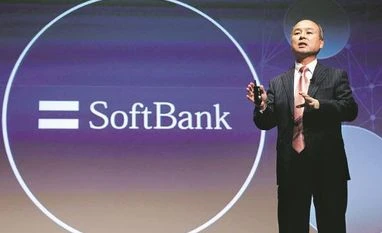 "Masayoshi Son goes on data binge with SoftBank's $100-bn vision Fund")












 Connect with us on WhatsApp