
Semiconductor shortage temporary, expected to be over by 2022: Bhargava
Maruti Suzuki India has not had a major impact due to global semiconductor shortage, though its production has been hit partly, company Chairman RC Bhargava said on Tuesday
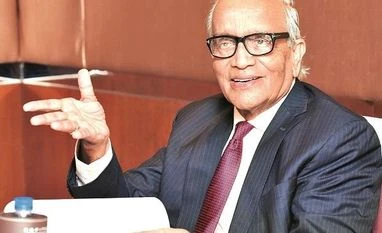 "Semiconductor shortage temporary, expected to be over by 2022: Bhargava")
WebinarsNew
Deep DiveNew
Explore Business Standard
Maruti Suzuki India has not had a major impact due to global semiconductor shortage, though its production has been hit partly, company Chairman RC Bhargava said on Tuesday
The current semiconductor shortage problem faced by the automobile industry is temporary and is expected to be over by 2022 and Maruti Suzuki India hasn't had a major impact due to it though its production has been hit partly, company Chairman RC Bhargava said on Tuesday.
Addressing shareholders at the company's annual general meeting held virtually, he also said the country's largest carmaker is looking at the electric vehicle (EV) space but will enter it only when it makes it feasible for customers in terms of affordability and also for the company to operate without making a loss.
"The shortage of semiconductors is a temporary problem partly due to COVID-19. Our estimation is that this shortage problem will be over by 2022," Bhargava said while responding to a query by a shareholder.
On the impact of the supply constraints of chips on production, he said, "Meanwhile, there has been a bit of a hit on production of vehicles and we have had to adjust but there is no major loss that we have to be concerned about."
Bhargava also said Maruti Suzuki India has outlined a capex of Rs 4,500 crore in the ongoing fiscal for its various business purposes but the actual expenditure will be known only at the end of the year.
Responding to a query on the company's plans for EVs, he said Maruti Suzuki is the leader in the conventional car industry and the company's intention is to achieve leadership position even in the EV sector in future.
However, he added that in India EVs will be able to penetrate in large numbers only when these become affordable to consumers.
"Maruti will be in the electric vehicle sector. We will introduce electric vehicles, but we will do that at an appropriate time when it will be feasible to sell these electric vehicles in reasonable numbers and when it will be feasible to sell them without making a loss on the whole operation," Bhargava asserted.
He said at present the government's focus is also on electrification of the two-wheeler segment, where companies like Hero Electric and Ola among others have been focusing on.
In the passenger vehicles segment, a few manufacturers have brought EVs "but the sales volume is very small and it has had no impact on the market share of Maruti Suzuki", Bhargava said.
On the issue of climate change, zero emission and carbon neutrality, Bhargava asserted that India has to follow its own timelines and not be forced by what the West has set.
"Yes, we must work with the rest of the world, we must be concerned about climate change, we must go on to reduce emissions. But we and the world have both to recognise the disparities in income and living styles and the disparity in the consumption of energy per capita in the developed world and in India," he asserted.
According to him, if India is at all is going to be able to give to a bulk of its citizens a decent and respectable lifestyle, if it is to catch up and reduce the gap between the living standard with the rest of the developed world, "it will require a much higher per capita energy consumption even if we adopt much more energy efficient means on consumption".
Bhargava further said, "And to do that we cannot follow everything which the West does. We have to make our own schedules and programmes and ensure that we do not adopt rules and regulations which results in the people of India not being able ever to come up to the point of levels which they need to come up with to reduce (the gap) with the rest of the world."
Stressing that this factor has to be kept in mind, Bhargava asserted, "We will take longer than the developed world and we should take longer than the developed world to reach carbon neutrality.
(Only the headline and picture of this report may have been reworked by the Business Standard staff; the rest of the content is auto-generated from a syndicated feed.)
First Published: Aug 24 2021 | 3:32 PM IST


 Connect with us on WhatsApp