Smartphone break can make you happy, productive
Researcher found that allowing employees to take smartphone micro-breaks may be a benefit rather than disruption for businesses
Press Trust of India Washington Want to be more productive and happier during the workday? Try taking a short break to text a friend, play "Angry Birds" or check Facebook on your smartphone, according to a new research.
Researcher Sooyeol Kim from the Kansas State University, found that allowing employees to take smartphone micro-breaks may be a benefit - rather than a disruption - for businesses.
Through a study of 72 full-time workers from various industries, Kim discovered that employees only spend an average of 22 minutes out of an eight-hour workday playing on their smartphones.
He also found that employees who take smartphone breaks throughout the day are happier at the end of the workday.
"A smartphone microbreak can be beneficial for both the employee and the organisation," Kim said.
"For example, if I would play a game for an hour during my working hours, it would definitely hurt my work performance. But if I take short breaks of one or two minutes throughout the day, it could provide me with refreshment to do my job," said Kim.
To study smartphone usage, Kim and collaborators developed an application that the 72 study participants installed on their smartphones.
The app privately and securely measured the employees' smartphone usage during work hours.
The app also divided the employees' smartphone usage into categories such as entertainment, which included games such as "Angry Birds" or "Candy Crush," or social media, which included Facebook and Twitter.
At the end of each workday, the participants recorded their perceived well-being.
"By interacting with friends or family members through a smartphone or by playing a short game, we found that employees can recover from some of their stress to refresh their minds and take a break," Kim said.
Taking a break throughout the workday is important because it is difficult - and nearly impossible - for an employee to concentrate for eight straight hours a day without a break, Kim said.
Smartphone micro-breaks are similar to other micro-breaks throughout the workday: chatting with coworkers, walking around the hallway or getting a cup of coffee.
Such breaks are important because they can help employees cope with the demands of the workplace.
"These days, people struggle with a lot of different types of stressors, such as work demands, time scheduling, family issues or personal life issues," Kim said.
"We need to understand how we can help people recover and cope with stressors. Smartphones might help and that is really important not only for individuals, but for an organisation, too," said Kim.
The research was presented at the annual Society for Industrial and Organisational Psychology Conference.

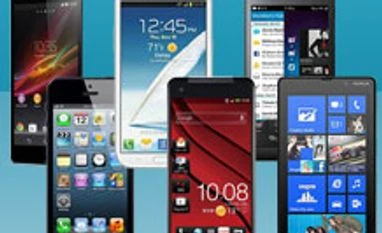 "Smartphone break can make you happy, productive")


 Connect with us on WhatsApp