The robot era won't need a lot more electricity: Know why

Where robots require electrical load, they create an economic incentive to conserve it elsewhere
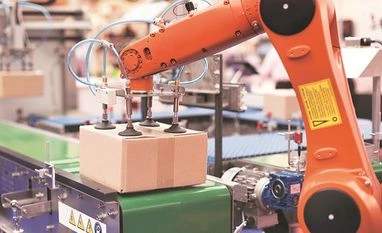
robots
robots
Bloomberg
Last Updated : Jun 10 2017 | 8:51 PM IST
As robots come to dominate manufacturing, and automation eats its way into more business processes, societies are beginning to address the future of work for humans. Another issue — for the power industry in particular— is whether programmable machines might also significantly increase electricity use.

In the wealthy countries of Asia, robots have already arrived. South Korea, Singapore and Japan are the three most automated manufacturing economies, according to the International Federation of Robotics. In Korea, 1 manufacturing worker in 21 is a robot. The US, Taiwan and five wealthy European countries fill out the top 10.

Since robots run on electricity, as do other automated processes for moving materials around the factory floor, an electric utility executive might reasonably hope that they will soon drive greater electricity demand. But a look at the past 10 years of electricity consumption in the top 10 countries suggests they might not.

Four countries on the list have increased their consumption since 2006 — Korea's power use is up almost 40 per cent and Singapore’s is up 30 per cent. But Taiwan’s use is up only modestly. And the US, by far the largest electricity consumer in the group, is up by just 1 per cent.

It’s not as if any of these countries are deindustrialised. Germany has a heavily industrial economy, and its producers are automating as much as possible. Siemens, for one, has boosted production at one factory ninefold in three decades without appreciably increasing its workforce. Yet, as a whole, Germany uses 5 per cent less electricity than it did 10 years ago.

To be sure, this is correlation, not evidence, that increasing automation lowers energy use, and there are many other variables in the mix.

Where robots require significant electrical load, they create an economic incentive to conserve electricity elsewhere — in lighting and heating, for example, which serve humans more than machines. The potential for near-total automation — and with it the “lights-out factory” devoid of human labour — would greatly reduce or eliminate the systems designed to keep people comfortable. In Google’s data centres, the temperature is 80 degrees Fahrenheit (27 degrees Celsius) in the “cold aisle” sections where people work, and 120 degrees elsewhere. And the ambient noise is so loud, humans can’t enter without ear protection. Continue the process of automation, and more energy-consuming systems disappear. No people means no refrigeration, no cooking, no TVs in the break room.

Every manufacturing company is looking for low to zero to negative growth in electricity use. So while intensive and pervasive industrial automation must be a tempting narrative for power company executives looking for new sources of demand, it’s more likely that the robot era will arrive with no need for extra energy. 

One subscription. Two world-class reads.

Already subscribed? Log in

Subscribe to read the full story →
*Subscribe to Business Standard digital and get complimentary access to The New York Times

Smart Quarterly

₹900

3 Months

₹300/Month

SAVE 25%

Smart Essential

₹2,700

1 Year

₹225/Month

SAVE 46%
*Complimentary New York Times access for the 2nd year will be given after 12 months

Super Saver

₹3,900

2 Years

₹162/Month

Subscribe

Renews automatically, cancel anytime

Here’s what’s included in our digital subscription plans

Exclusive premium stories online

  • Over 30 premium stories daily, handpicked by our editors

Complimentary Access to The New York Times

  • News, Games, Cooking, Audio, Wirecutter & The Athletic

Business Standard Epaper

  • Digital replica of our daily newspaper — with options to read, save, and share

Curated Newsletters

  • Insights on markets, finance, politics, tech, and more delivered to your inbox

Market Analysis & Investment Insights

  • In-depth market analysis & insights with access to The Smart Investor

Archives

  • Repository of articles and publications dating back to 1997

Ad-free Reading

  • Uninterrupted reading experience with no advertisements

Seamless Access Across All Devices

  • Access Business Standard across devices — mobile, tablet, or PC, via web or app

Next Story



