Chip giant Intel has been in India for over two decades and has been an integral part of the Digital India roadmap. Prakash Mallya, Vice President and Managing Director-Sales, Marketing and Communications Group, Intel India, in a conversation with Shivani Shinde, talks about Intel’s take-on issues such as the recent tech glitches that Indian government portals have seen, the pandemic’s impact on education and Intel in India. Excerpts:
What is the one big trend that will impact the future adoption of technology in India?
Post pandemic, one thing is clear, technology has become extremely important and will continue to matter in the future. From India's point of view, cloud is going to be crucial. Cloud as a model will be the only service model. You have seen that progress in some areas like digital payment, fintech but you will see this across every vertical. In India, the interesting part is that it is not about consumption, but that the country is home to several other global SIs with whom we partner, and we see this playing out there too.
Two, the pandemic made us realise the potential of work from anywhere. Every industry has figured out what is the best way to address its customer with this model in place now. I believe that with WFH, it is moving away to smaller towns. The dynamic there then is: how do I skill people, how do I keep them current? Third, our vision is to accelerate the transformation of the country in its digital journey. At the highest level when you look at computing, it will evolve to become very heterogeneous, one workload will not serve all, or one part of the ecosystem will not serve everyone.
Work from anywhere, or educate from anywhere, will be key.
If you look at tech adoption in India, on the one hand we have successes like Aadhaar, UPI and Cowin, but then there are government portals where glitches continue or even the banking sector that gets pulled over by the regulator. Comment.
I think there are so many aspects that none of the other countries in the world have seen such accomplishments. Who can boast about digital identification of over one billion under Aadhaar? I would think that the approach to digital is going to go vertical. We have seen the innovation that UPI has been able to do for fintech, which has been to abstract everything into an API and then built for scale. I do see the fintech ecosystem rapidly evolve from just financial transactions. This will get added because you built an open source-based API on which other players could come and add. I see a similar model in the rest of the verticals.
National Digital Health Mission or an agriculture-specific vertical, if these are done on the similar model, that is, digital ID-based, API-based and everybody builds for that. We have seen conversations happening in that regard… we can create world-class systems.
The challenge for the country is, of course, scale. But doing it at scale is the only way to create impact. The pace of innovation in the public-private cooperation space is a fantastic case study. If we do this for many other verticals, I see a case for disrupting our current service delivery model for new things.
There will always be glitches. I interact with global friends and colleagues. Nobody has a vaccination system as good as India’s.
When you historically look at services it used to have a dependency on physical infrastructure… so banks need a branch. Healthcare you need clinic…but what cloud has been able to do is to unleash the scale irrespective of the vertical and that will be crucial from India. If you look at the data centre infrastructure in India, a third of it is cloud. This will only accelerate in future.
A case in point is our collaboration with Sankara Eye Foundation, AWS and Singapore-based Leben Care on Netra.AI, a cloud-based AI solution. It looks at images and detects diabetic retinopathy. India has one of the largest diabetic populations in the world. Imagine if you can detect diabetic related eye disorders through an image that too early, it can do wonders.
Finally, the youth of this country is the biggest asset--we have the largest footprint of software developers. The ability that these youngsters have in disrupting the existing structure is amazing.
Intel has been working with the government for years on the education side. Are there learnings from the pandemic?
Education is a big focus for us. We drove the Intel Teach programme in India. Education is a massive scale issue. We need to create a model that is unique to India. The dynamic of 320 million children is very varied--they speak different languages, they are from different demographics, they come from diverse social setups. So how do we create something which is scalable, unique and yet personalised for learning?
Fundamentally, we have to look at learning in a few ways, you can either educate students in the classical way (10+2 and so on) and then there is the informal skilling as well. India is a country which will go both ways. And as we do this there will not be a one size fit for all.
Some of our learning from the PC Paathshala campaign is that a lot of learning is synchronous. How do we personalise education according to each child? It will mean training more teachers. As you do this, one gap that has historically been limiting education to scale for impact is because schools are where teachers are but we found that technology can bridge that gap.
We have seen teachers who went beyond the schools and colleges. They would teach to make education accessible during the pandemic.
Another approach is how do we skill the youth. We are looking at something called AI for Youth. This will upskill the youth in AI but also ethics of AI and they can build from small applications. But this is not going to be a cookie-cutter type of solution, we will need collaboration to create a breakthrough. The new Education Policy is a great framework, very progressive. It is going to be a journey.
5G and Intel’s India strategy?
We have focused on virtualisation of networks for years. That means the journey from 4G network, which is a proprietary network, to open standard networks. This has been Intel’s journey globally and it’s the same in India too.
5G is important because once you virtualise the network, it will be the most important element to build on top of when 5G comes. These models will be more B2B, but the biggest will be the capabilities of the industrial internet to happen. It can connect factories, cameras, supply chain networks, agriculture facilities across the country and so on. 5G could be transformational for India.

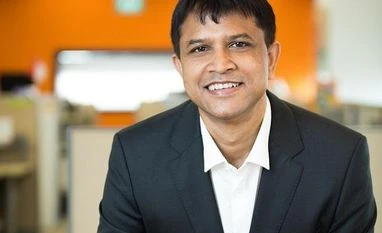 "Work from anywhere, educate from anywhere is key: Prakash Mallya of Intel")










 Connect with us on WhatsApp