If United States President Donald Trump’s imposition of 25 per cent tariffs on all Indian imports — to penalise India for its protected economy and for buying military equipment and energy from Russia — seems like bullying, let us pause to consider what happened when the US negotiated a deal with India in 1985. This event from four decades ago seems instructive for anyone who believes that the relationship between the two countries has suddenly hit a new low.
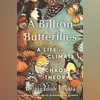
Jagadish Shukla, a professor of climate dynamics at George Mason University, tells this incredible story in his memoir A Billion Butterflies: A Life in Climate and Chaos Theory. Apparently, in 1985, over tea at the Waldorf Astoria in New York, Prime Minister Rajiv Gandhi told President Ronald Reagan that India needed a supercomputer for monsoon forecasting. Reagan agreed. However, his “national security council and other federal agencies…tried to dissuade him from approving the sale”. Reagan kept his word but not before getting India to comply with “a few humiliating stipulations”, as Dr Shukla puts it.
India could buy a supercomputer, a Cray X-MP/14, by paying the “full list price —about ten million dollars”, and securing the facility that would house the computer with fences and rifle-wielding guards. Only Cray employees and American citizens were permitted to enter. The agreement was that no one of Indian origin, except Dr Shukla, would be allowed near the machine. He was not an American citizen then but he was working at the University of Maryland, and had worked with the National Aeronautics and Space Administration earlier.
In retrospect, the conditions that India was required to comply with come across as racist but India needed to invest in a modern supercomputer and stop relying on the “ancient machines” that were still in use in the mid-1980s. Dr Shukla recalls how “the best supercomputers were built by American companies”, and it seemed unlikely that the American government would authorise the sale of one to India, which was “a Soviet ally at the height of the Cold War”.
Apart from people working in the field of climate science, this book will appeal to those who are curious about how politics, international relations and diplomacy impact scientific developments. “An Indian supercomputer might become a Soviet supercomputer, the thinking went, and be put to use developing nuclear weapons or cracking American military code,” Dr Shukla adds. This book equips us with a historical understanding to look at current developments as a continuation of past insecurities that stay unresolved despite the claims of friendship that President Trump and Prime Minister Narendra Modi made not so long ago.
The author also reveals that his letter requesting Mr Modi to persuade Mr Trump “not to withdraw the United States from the Paris Climate Agreement” went unanswered, and so did his appeal for India to “launch a comprehensive national climate assessment, which is necessary for climate adaptation.” While the reluctance to push Mr Trump is understandable, the lack of enthusiasm to benefit from Dr Shukla’s expertise is surprising as he is one of the lead authors of the 2007 report of the Intergovernmental Panel on Climate Change (IPCC), and was part of a team that shared the Nobel Peace Prize with Vice-President Al Gore. His work studying monsoons is “the direct result of seeing how vital the rains were” for farmers in Mirdha—a village in the Ballia district of Uttar Pradesh where he was raised before he went to study at Banaras Hindu University and the Massachusetts Institute of Technology.
The book ventures beyond his public role as a scientist and an academic, and does not shy away from talking about the price that he had to pay to achieve what he did—including homesickness, a divorce, financial risks, and harassment from the fossil fuel industry.
Dropping truth bombs is something that he seems to have imbibed from his mother. He recalls the occasion when she asked him, “You are doing so much around the world, going here and there…but what have you done for the village?” That inspired him to set up a college in his village, especially to enrol girls who have traditionally been denied post-secondary education. He also speaks out against the erasure of the contributions made by women who were scientists, lab assistants, and “overlooked wives of famous scholars”.
The author is refreshingly candid in his critique of the IPCC. Referring to the travel involved in working on an IPCC report, he writes, “…the joke among climate scientists was that IPCC itself was responsible for much of the carbon in the atmosphere.” This book is worth reading not only to learn about climate research but also the eventful life of an exemplary scientist.
The reviewer is a journalist, educator and literary critic. Instagram/X: @chintanwriting