AAP & Down: An Insider Story of India’s Most Controversial Party
Author: Mayank Gandhi with Shrey Shah
Publisher: Simon & Schuster India
Pages: 291
Price: Rs 399
The first edition of this book appeared in 2018. Between then and now, Mayank Gandhi, an activist dedicated to social transformation, justice and equity has exited power politics, preferring to watch from the sidelines, the rise (or decline, depending on your persuasion) of a movement he helped create that became a caricature of itself, then a political party and then a monstrous leviathan. Although Shrey Shah, a lawyer who hopes to become an IAS officer one day by using the strengths of the system to purge itself, is listed as a co-author, Mr Gandhi, his mentor, says he “helped” him write the book. This, then, is essentially Mr Gandhi’s narrative.
The book explains that around 2011, Mr Gandhi became a part of the India Against Corruption (IAC) movement and a member of its 24-person “core committee”, which was officially the full extent of the movement in a formal organisational sense. Mr Gandhi also served as a member of the national executive of the Aam Aadmi Party (AAP) until 2015, besides acting as the party’s head in Maharashtra. His unit was disbanded because of differences with the party chief Arvind Kejriwal. In 2015, he resigned from the party’s national executive.
The original version of the book describes in detail how the transformation of AAP was mirrored in the transformation of its leaders. The current version brings it up to date, including references to the Swati Maliwal episode and the liquor excise scam: Not discussed in much detail, except to strengthen the belief of the authors that AAP had lost its way. The book is worth reading just to revisit what AAP was and what it has become. Mr Gandhi’s conclusion: AAP was on a slippery slope when it decided to become a political outfit but it has slid further beyond recognition.
Although a lot of Mr Gandhi’s assessment stems from his angst as an idealist who was betrayed by the organisation he helped found, it is a shrewd, objective, first person account of the heyday of India Against Corruption (IAC), the fight for a Jan Lokpal and the persona of Anna Hazare, who comes across as capricious, stubborn and not especially astute, but a man with his heart in the right place. It was Mr Gandhi who brought Arvind Kejriwal and Anna Hazare together, navigating the minefield of egos, coteries and cabals, and colliding ambitions. Managing Anna Hazare, Mr Gandhi says, was “nerve-wracking”. He has a hilarious description of one such incident: Mr Hazare, in Delhi for a consultation, got upset about something and locked himself in his room in his guest house in Mayur Vihar. Entreaties to open the door were ignored. Three hours passed. Fearing the worst, at risk to life and limb, a volunteer shinned up the water pipes several floors above to reach the balcony of the room. He found Mr Hazare asleep. The next morning, Mr Hazare emerged from his room as if nothing had happened.
The account of people’s response to IAC is stirring and moving. Shailesh Saraf, vice-president at Morgan Stanley in Hong Kong took “fasting leave” to join Hazare’s fast for a Jan Lokpal. A thief who had stolen some valuables from someone’s purse was so struck by remorse that he came to donate money for IAC. The whole country, it seemed, had rediscovered idealism.
But Mr Gandhi describes how the Kejriwal-Hazare relationship became increasingly transactional, eventually unravelling on the issue of forming a political party. The Jan Lokpal agitation had created tremendous public momentum for institutional reform. IAC had become bigger than its leaders. What should be done with it? The natural next step was to form a political party. But Mr Hazare and many others in IAC were opposed to the idea. This was not the only problem. Democracy in leading the organisation would become the central point of tension.
And then there was the issue of power.
AAP left Mr Hazare behind and pressed on with electoral participation. They lost more elections than they won. The party was comfortable with adulation, not so much with defeat. The Lok Sabha setback of 2014 was a learning for AAP cadres. The 2013 Delhi Assembly election had led to the defeat of the Congress. But it did not establish AAP in power. Given the numbers, if AAP and Congress collaborated, a government could be formed. This was Mr Kejriwal’s logic. Others, including Mr Gandhi, were horrified. AAP’s raison d’etre was opposition to both the Bharatiya Janata Party and Congress. How could the party countenance doing a deal with one? Mr Gandhi could see Mr Kejriwal’s motivation: With 28 seats in a 70-member house with the BJP getting 32 and the Congress down to eight, the temptation of forming the government was great. And Mr Kejriwal wanted that so badly. He became chief minister only to resign 49 days later. But even in that period, Mr Gandhi and Mr Kejriwal clashed on the issue of a government house for the chief minister. Every instinct told Mr Gandhi the slide had begun.
The bitter parting of ways between Mr Kejriwal and Yogendra Yadav and Prashant Bhushan has been documented publicly. But Mr Gandhi reveals the bloody entrails that the 2015 massacre left behind. Some men emerged as Mr Kejriwal’s go-to men. Others like Atishi were asked to choose between Mr Kejriwal and the Yadav-Bhushan combine. Things reached such a pass that there were “bouncers everywhere” when the fateful March 28 meeting took place. The rest is history.
Mr Kejriwal’s transformation is akin to the Picture of Dorian Gray. Despite heartfelt belief in everything that IAC and AAP stood for, Mr Gandhi records his sense of disappointment in the book. It is an illuminating and well-written account of movements, parties and power.

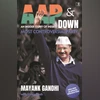 "Aam Aadmi Party's journey from idealism to power: A first-hand account")

