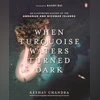
WHENTURQUOISE WATERS TURNED DARK
Author: Keshav Chandra
Publisher: PenguinRandom House
Pages: 248
Price: Rs 2,599
It is inspiring to witness how some people are able to make time for their creative pursuits alongside a demanding day job. Indian Administrative Service officer Keshav Chandra, who is the chief secretary of the Andaman and Nicobar Islands, is a case in point. In addition to being a civil servant, he is a photographer, painter, poet, and now author of the book When Turquoise Waters Turned Dark: An Illustrated History of the Andaman and Nicobar Islands.
This is not just another lavishly produced coffee table book with pleasing images. The ethereal beauty of the landscape in this Union Territory is juxtaposed against its sordid history of colonisation. Mr Chandra’s photographs of starlit skies, dense forests, the vast ocean, gorgeous sunsets, herds of spotted deer and towering palm trees are interspersed with disturbing details of how Danish missionaries tried to convert the local population to Christianity, how Malay traders captured and sold the inhabitants as slaves, and how British rulers used the islands as dumping grounds to punish hardened criminals as well as Indian political revolutionaries. “Imperialists came to the Andaman like hermit crabs—colonising others’ homes and pretending to be their rightful owners. They made it into a penal colony for almost 90 years,” he writes.
While enchanted by the pristine environment, these colonists had no qualms about clearing the forest cover for construction projects. Unlike tribals who had ancestral ties to the land and a reverence born from how deeply their lives were embedded in nature, the colonisers saw it merely as a resource that they could profit from. Mr Chandra notes, for instance, that the lime for the mortar used to build the Cellular Jail “was obtained by burning coral reefs”.
It is entertaining to read about the lengths that the British went to make themselves comfortable in their new settlements. Since “large cutters” (fast-sailing boats) dragged by convicts were inconvenient, “small lighters” (swift boats) were developed for communication and transport between islands, and for the “disposal of night soil”. Whistlers were engaged and guns were fired to keep time. The idyllic surroundings must have seemed boring after a point as they were too cut off from the buzz of urban life. Cricket, tennis, hockey, golf, sailing, theatre, and dance helped them fill their spare time with something social and fun.
This book, however, is not geared towards evoking sympathy for the British. In fact, it is hard to suppress one’s rage while reading about how they made life utterly miserable for convicts. Some convicts were subject to solitary confinement meant to discipline them. Many were made to sleep on the floor with iron chains tied around their legs for six months at a stretch. Some jailors found sadistic pleasure in disallowing convicts to use the toilet at night. Ironically, it was the labour of these convicts that enabled the British to build settlements.
Mr Chandra writes, “The Cellular Jail became the symbol of colonial atrocities and the sacrifice of nationalist leaders after political prisoners were brought there.” Today, it has transformed itself into a national memorial and a tourist destination, especially for fans of Vinayak Damodar Savarkar. However, this jail, as the author reminds us, also had other high-profile inmates especially from a revolutionary group called the Anushilan Samiti that planned and executed attacks on and assassinations of British officers. They used weapons and bombs.
This book makes one realise how the British colonial footprint can be glimpsed even to this date in the names of places such as Port Blair and Mount Harriet. The capital city is named after Archibald Blair, a naval surveyor employed by the East India Company. The latter is a peak named after writer and photographer Harriet Christina Tytler. She was married to Robert Christopher Tytler, who was the superintendent of the Ross Island Penal Colony that was used to keep prisoners from the Sepoy Mutiny in 1857. Incidentally, Ross Island is named after British marine surveyor Daniel Ross.
While the Indian government has renamed Port Blair as Sri Vijaya Puram, Mount Harriet as Mount Manipur, and Ross Island as Netaji Subhas Chandra Bose Dweep to shed colonial baggage, the older names are too deeply entrenched in the minds of people to be erased overnight.
Unfortunately, this book does not address how the six major tribal groups — Andamanese, Jarawa, Onge, Sentinelese, Nicobarese and Shompen — in the archipelago view the presence of the Indian state in their lives. To what extent are their concerns incorporated into policies framed in Delhi? How do they feel about being assimilated into what Mr Chandra calls the “melting pot of Indian culture”? The book also leaves out the criticism received by the central government from environmentalists and anthropologists who are worried that the Great Nicobar Island Development Project will be detrimental to biodiversity as well as indigenous people’s rights. One hopes that other authors writing about the Andaman and Nicobar Islands, especially those who are not employed by the government, will confront these issues more openly.
The reviewer is a journalist and educator, reachable @chintanwriting on Instagram and X

 "Exploring the beauty and dark past of the Andaman and Nicobar Islands")


