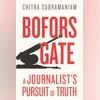
Bofors Gate: Chitra Subramaniam's book deep-dives into the arms scandal

A household name for her investigation into the Bofors scandal, Chitra Subramaniam's book offers an unsparing account of the defence deal, even as it examines her own motivation

Bofors Gate: A Journalist's Pursuit of Truth
Bofors Gate: A Journalist’s Pursuit of Truth
Aditi Phadnis
5 min read Last Updated : Mar 11 2025 | 10:58 PM IST
Bofors Gate: A Journalist’s Pursuit of Truth
Author: Chitra Subramaniam
Publisher: Juggernaut
Pages: 291
Price: ₹899
  It is no exaggeration that the 1980s and 90s in Indian politics were the decades of the Bofors saga: Allegations of a ₹64 crore bribe in a ₹1,437 crore deal. On March 24, 1986, Rajiv Gandhi approved the proposal to give Swedish armaments giant AB Bofors, the contract to sell to India 155mm towed guns, popularly described as having “shoot and scoot” capabilities. In April 1987, Swedish state radio broadcast that Sweden won the contract only after paying bribes to senior Indian politicians and others in four instalments to accounts in Swiss banks. This was confirmed by the Swedish National Audit Bureau, which said Svenska, the front company belonging to Washeshar (Win) Chadha, was paid commissions. Others were named but as large parts of the report were redacted, we do not know at whose request. From a reporter — an Indian based in Switzerland — who didn’t know what a “howitzer” was when she began reporting on the sale of Bofors guns to India, Chitra Subramaniam is a household name for her investigation into this scandal.
 
Yet we still don’t know the identity of all the beneficiaries of the Bofors pay-offs, Ms Subramaniam says, because of the reluctance of successive Congress and non-Congress governments to upset Gandhi apple carts, which resulted in several boxes of evidence given by the Swedish and Swiss governments lying unopened in the Central Bureau of Investigation offices. The case was closed in 2011. She reveals for the first time in this book the name of one of her whistleblowers, the Swedish head of police, Sten Lindstorm, who was conducting the Bofors investigations and supplied her with enormous amounts of written evidence, including the diaries of Bofors Managing Director, Martin Ardbo. The most shocking information was that senior Indian bureaucrats had “tutored” Bofors officials at a “secret meeting” in 1987 on “how to absolve then Prime Minister Rajiv Gandhi of all blame”. “It was a 15-page agreed-upon summary of how to hide corruption, how to deal with my investigations as I made progress and, above all, how to absolve PM Rajiv Gandhi of all blame. These discussions were held in the Ministry of Defence on 15, 16, and 17 September 1987,” she writes.
 
The book reviews the role of Arun Nehru; and the government’s attempts to frame Amitabh Bachchan. She was under pressure to find evidence that linked one of the pay-off accounts as Bachchan’s. She describes his visit to her home with wife Jaya, after she refused to write stories that suggested he was a recipient of commissions (he helped her mother-in-law lay the dinner table.) The government itself diluted requests to seek information from Switzerland.
 
Ms Subramaniam’s struggles as a reporter, a wife, and a young mother are poignant. “Four years into my marriage, I had a baby just as the scandal broke. I raised our son between feeding bottles, Pampers, mashed apples and trunk calls from India. As I juggled my marriage against the biggest story of my career and my country’s contemporary history, questions ran amok through my mind,” she writes.
 
As editors she worked with collected awards for investigations she had done, while colluding with the very people they had vowed to “expose”, Ms Subramaniam says she found friends in the unlikeliest places: Some fellow journalists, whistleblowers in Switzerland and Sweden, helpful lawyers, au pairs  and many who are nameless in the book. There was danger too. She battled anonymous calls and smashed car windows. The brakes in her car failed and were found to be tampered with. Explicit death threats to her baby son were made over trunk calls from India. On one occasion, a Ms Donovan from the UK tried to deposit money in her bank account.
 
In parallel, the book details another case of corruption — the purchase of the HDW submarines from Germany, the investigation of which also came to nought. Earlier this week, Christian Michel James, the alleged middleman in the AgustaWestland VVIP chopper scam, refused to accept bail, calling Delhi an “unsafe” place for him. He has been in prison for six and a half years for a crime that has seven years maximum punishment. His trial hasn’t even begun. It does make you wonder.
 
Ms Subramaniam’s book goes deep into the complex financial network of companies where the Bofors bribery money was lodged. She unearthed all the linkages at a time when there were no mobile phones or internet, and negligible institutional support. That she could unearth so much information is testament to her passion as a reporter.
 
Despite all that, her book is occasionally confusing. She writes that Martin Ardbo was on the flight that was carrying Rajiv Gandhi and Swedish PM Olaf Palme. Which flight? From where? She writes that Ardbo, seated within hearing distance of both men, smiled to himself: He reckoned the contract was a done deal. But how do we know this as, in the next paragraph, she writes: “We still don’t know what terms were discussed on the flight”.
 
There are small but jarring errors. The joint secretary in the ministry of defence who was part of the secret meeting to tutor Bofors was not K Banerji but T K Banerji. Teji Bachchan was a she, not a he. The grant to the Rajiv Gandhi Foundation made by Manmohan Singh in his first Budget was not ₹1,000 crore but ₹100 crore. And it was not “S Chandrashekhar” who became Prime Minister after V P Singh but Chandra Shekhar.
 
But Ms Subramaniam’s book is truthful and unsparing even when it comes to examining her own motivations. All reporters must read it and all Indians must learn from it.

One subscription. Two world-class reads.

Already subscribed? Log in

Subscribe to read the full story →
*Subscribe to Business Standard digital and get complimentary access to The New York Times

Smart Quarterly

₹900

3 Months

₹300/Month

SAVE 25%

Smart Essential

₹2,700

1 Year

₹225/Month

SAVE 46%
*Complimentary New York Times access for the 2nd year will be given after 12 months

Super Saver

₹3,900

2 Years

₹162/Month

Subscribe

Renews automatically, cancel anytime

Here’s what’s included in our digital subscription plans

Exclusive premium stories online

  • Over 30 premium stories daily, handpicked by our editors

Complimentary Access to The New York Times

  • News, Games, Cooking, Audio, Wirecutter & The Athletic

Business Standard Epaper

  • Digital replica of our daily newspaper — with options to read, save, and share

Curated Newsletters

  • Insights on markets, finance, politics, tech, and more delivered to your inbox

Market Analysis & Investment Insights

  • In-depth market analysis & insights with access to The Smart Investor

Archives

  • Repository of articles and publications dating back to 1997

Ad-free Reading

  • Uninterrupted reading experience with no advertisements

Seamless Access Across All Devices

  • Access Business Standard across devices — mobile, tablet, or PC, via web or app

Topics :BS ReadsBook readingBOOK REVIEWBoforsBofors scam

Next Story