Published by HarperCollins India
If you loved reading The Shadow Lines (1988) and The Hungry Tide (2004), written by Amitav Ghosh, chances are that his latest novel, Ghost-Eye, will blow your mind. He writes, yet again, with deep affection for Calcutta (now Kolkata) and the Sundarbans, and from a moral responsibility to make amends for the ecological harm that human beings have caused.
It opens with a deceptively simple premise: What happens when a three-year-old girl, raised in a strictly vegetarian Marwari household in Calcutta of the 1960s, suddenly demands a meal of fish and rice one day, and refuses to eat anything at all until she has her way? This, however, is no ordinary craving. This child, named Varsha, who now lives in a sprawling mansion, remembers a past life where she grew up in a mud house by a river, where catching and cooking fish was part of everyday life. She remembers the exact location of that house, and the names of her parents.
Her father, Abhay, a photographer by training, and an anomaly in a business family, seeks the help of a psychologist called Shoma to help his daughter. The author’s gentle treatment of the relationship between Abhay and Varsha is one of the most beautiful aspects of this novel because it shows that there are mature alternatives to tough love, which prioritise respect over fear.
This is best captured in the words of Dinu, the narrator, whose life is intertwined with Shoma’s and Varsha’s. Dinu notes, “Shoma marvelled inwardly at how Abhay had unquestioningly and unflinchingly accepted the possibility that his beloved Varsha, now cocooned by his family’s vast wealth, had in her past life been a poor fisherwoman with a troubled family history.”
His acceptance is juxtaposed against the denial and rejection with which her mother Dipika responds. She cannot bear the fact that Varsha used to eat fish in her previous life. What makes things worse is that Varsha remembers her mother from that lifetime, and displays a greater fondness for the woman who not only allowed her to eat fish but also taught her how to cook it.
Fortunately, the author does not go down the simplistic route of pitting vegetarians and non-vegetarians, or Bengalis and non-Bengalis, or Hindus and Muslims, against each other. He points out, through Varsha’s caretaker Bhola’r-ma, that even Bengali Hindu families that usually consume fish have customs forbidding widows from partaking of non-vegetarian food. She wants Varsha’s parents and grandparents to know that she has not been feeding Varsha any fish on the sly.
Ghosh also deserves appreciation for his skillful portrait of the psychologist as a professional who builds trust, offers non-judgemental listening, and finds creative ways to support the well-being of her clients. Shoma comes across as a woman whose scientific background gives her the tools to help Varsha and her family but she never loses her sense of wonder or the intellectual humility to admit that there are ways of knowing in which she is not fluent.
It is hard to say more about the novel without giving away spoilers but it is worth noting that the narrative flits between Calcutta in the 1960s and present-day Brooklyn, and includes the Covid-19 pandemic as well as Cyclone Amphan in its broad sweep of historical events that intersect with the tragedies and epiphanies that Ghosh’s characters face.
Dinu’s son Tipu, who appears later in the novel, is an environmental activist trying to stop a power plant from destroying the Sundarbans. His approach is unconventional but refreshing, because it draws on indigenous knowledge and lore alongside environmental impact studies.
Ghosh has this incredible knack for approaching the whole process of world-building in such an empathetic way that you feel like his characters live down the road and have a relationship with you. He makes you feel so invested in their lives that you root for them and weep with them. You want to know about what happens to them much after you have finished reading the book.
We are lucky that Ghosh continues to tell stories that are profound, layered and meaningful. He is able to write confidently about history, science, mythology, and faith without sounding contrived. This is a gift in a world where cleverness and packaging determine what sells.
The reviewer is a writer, journalist and educator. He can be reached @chintanwriting on Instagram and X

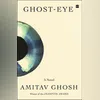 "Ghost-Eye: Amitav Ghosh's book on rebirth, regeneration and cycles of life")












