Breakneck: Why China needs to learn to build less and America to build more

Wang is a Canadian citizen who migrated from China at a young age with his parents, and later went on to work in the Silicon Valley
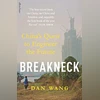
Breakneck: China's Quest to Engineer the Future
Breakneck: China’s Quest to Engineer the Future
Sneha Pathak
5 min read Last Updated : Dec 09 2025 | 11:09 PM IST
Breakneck: China’s Quest to Engineer the Future
by  Dan Wang
Published by  Penguin Random House
260 pages ₹1,499
 
 
Cheap, capricious, unreliable. Reading the words “Made in China” on a product brought these words to mind not so long ago. But no more. With China now a hub of production and manufacturing for major companies across the globe, things today are different. Dan Wang’s Breakneck: China’s Quest to Engineer the Future shows how far China has come in the fields of manufacturing and infrastructure and the price paid by its people to reach this point. It also compares China and America as they race towards embracing (in the case of China) and maintaining (in the case of the US) their role as global leaders and superpowers.
 
Wang is a Canadian citizen who migrated from China at a young age with his parents, and later went on to work in the Silicon Valley. This, coupled with the fact that he has also lived and worked in China in the recent past, gives him a unique vantage point. He uses his first-hand knowledge of China and America to talk about both nations, and provides his readers with a glimpse of where these countries stand today and where they might go from here.
 
The central thesis of Breakneck is the analysis of the competition that (according to Wang) will define the 21st century: China’s engineering state, which “can’t stop itself from building” versus the lawyerly society of America, which “blocks everything it can.” In support of this argument, Wang cites irrefutable facts. China today can boast of “an expanse of highways equal to twice the length of the US systems... and almost as much as solar and wind power capacity as the rest of the world put together.” This world class infrastructure available even to its poorest provinces stands in sharp contrast to the major American cities like San Francisco where “even many wealthy people have to keep a generator...because the state can’t keep the lights on.”
 
But the race doesn’t end here. China’s engineering state also gives America stiff competition in technology since it has now become a centre of global manufacturing. Places like Shenzhen have turned into international hubs owing to the quality and variety of electronic components available there. Wang compares this with America where the percentage of population engaged in manufacturing has seen a steady decline as manufacturing jobs are constantly outsourced and claims that this is what has led to the country losing “process knowledge”, an important component which has contributed to China’s growing technical superiority.
 
Wang, however, is not blind to the drawbacks of the engineering state. This becomes clear in his chapters on China’s One Child and Zero-Covid policies. These chapters reveal what happens when an engineering state adopts drastic measures in the service of mathematical outcomes without taking the human element into consideration. This excessive and brutal application of blind social engineering at the cost of people can never happen in a lawyerly state, he suggests. America’s lawyerly society was a necessary measure which came into being after the problems America faced in the 1960s — a time when the country underwent rapid development and industrialisation. But almost half a century later, lawyerly society has become the cause of its problems as excessive proceduralism, which lawyers love, has paralysed the country.
 
And while it’s still a superpower, America needs to hold on to its pluralism and even encourage it — something that China doesn’t — along with going back to manufacturing and building on a grand scale once again to maintain its position in an ever-changing world. He ends the book with the idea of embracing the word “developing” rather than “developed”, because while developed has a sense of finality and immobility, developing leaves scope for going further and achieving more.
 
Breakneck is both engaging and appealing. Even a curious, casual reader can read the book without feeling overwhelmed as its style ensures that it never lapses into a dry tome regurgitating facts and figures. Wang’s personal association with both countries allows him to bring a human touch to all his arguments. Anecdotes, personal stories such as the bicycle ride with his friends from which the idea of Breakneck germinated along with the story of his family’s migration, facts, and data all fuse well together in Breakneck  making it a persuasive and timely read for everyone, including readers with a casual interest in China.
 
Wang’s argument about bringing manufacturing back is persuasive, more so when coupled with his illustration of how this has enabled China to grow from manufacturing for other countries to developing its own industry. So is his suggestion to strike a balance between the engineering state and the lawyerly society. His assertion for a better future is simple: It can be achieved if China learns to build less and America learns to build more. But for two nations doing the opposite, this is easier said than done.
 
The reviewer is an independent writer and translator
 

One subscription. Two world-class reads.

Already subscribed? Log in

Subscribe to read the full story →
*Subscribe to Business Standard digital and get complimentary access to The New York Times

Smart Quarterly

₹900

3 Months

₹300/Month

SAVE 25%

Smart Essential

₹2,700

1 Year

₹225/Month

SAVE 46%
*Complimentary New York Times access for the 2nd year will be given after 12 months

Super Saver

₹3,900

2 Years

₹162/Month

Subscribe

Renews automatically, cancel anytime

Here’s what’s included in our digital subscription plans

Exclusive premium stories online

  • Over 30 premium stories daily, handpicked by our editors

Complimentary Access to The New York Times

  • News, Games, Cooking, Audio, Wirecutter & The Athletic

Business Standard Epaper

  • Digital replica of our daily newspaper — with options to read, save, and share

Curated Newsletters

  • Insights on markets, finance, politics, tech, and more delivered to your inbox

Market Analysis & Investment Insights

  • In-depth market analysis & insights with access to The Smart Investor

Archives

  • Repository of articles and publications dating back to 1997

Ad-free Reading

  • Uninterrupted reading experience with no advertisements

Seamless Access Across All Devices

  • Access Business Standard across devices — mobile, tablet, or PC, via web or app

Topics :BOOK REVIEWChinaengineering

Next Story



