Good science, bad communication

Ignorance and misunderstanding are rife in how the media reports on scientific matters. Fiona Fox's book addresses this fissure and how to bridge the divide
BOOK
Devangshu Datta
5 min read Last Updated : Jul 24 2024 | 10:43 PM IST
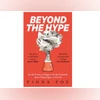
Beyond the Hype: Inside Science’s Biggest Media Scandals from Climategate to Covid
Author: Fiona Fox
Publisher: Simon & Schuster
Pages: 310
Price:  Rs 399

Public policy in democracies is informed and driven by a combination of expert opinion, the inclinations of politicians (who may not know much about the issues) and by public opinion, since that may translate into votes. Public opinion, in turn, is shaped by media reportage and social media content.

Also Read


When the issue is scientific, there’s a big problem: The media has little understanding of science, and social media visibility is driven by controversy and sensational misinformation, rather than facts. Also scientists — the experts in this case — are often terrible at communication. 

This triptych of misunderstandings and ignorance has been visible for decades with climate change, resulting in poor global policymaking. More dramatically, we’ve seen millions of unnecessary deaths during the Covid-19 pandemic due to poor policy responses and misinformation.

The author is the CEO of Science Media Centre, a charitable institution set up to bridge this communication gap. The SMC’s mission involves getting scientists to do media better, and in practice it also involves inducing government PR machinery to be more transparent, since a large proportion of science funding comes from the government.

Over a period of 20-odd years, author Fiona Fox has been backstage during controversies surrounding hot-button issues such as climate change, Covid, animal research, genetically modified foods, hybrid embryos, vaccines, chronic fatigue syndrome, nuclear power, and other sciency stuff.

She’s upfront about the fact that these are her personal recollections and opinions. Ms Fox is not trained in the sciences, and her experiences prior to SMC were in journalism and PR, including working for the Catholic Aid Agency CAFOD, and writing for a far-left magazine, Living Marxism. The perspective is UK-centric.

Hence, the accuracy of her memories and the direct relevance of these stories may seem moot.  But anyone who has been in peripheral contact with science journalism, or somebody who has tried to extract information from government agencies or make sense of scientific experts and translate their pronouncements into natural language will find resonances. The areas of concern are very relatable no matter where you live, but readers may need to do mental translations for their own political and STEM environment. The book is written in a chatty personalised style (with four-letter words where appropriate) and it helps diagnose some of the reasons for the science-media gap. 

The SMC has tried to get scientists, research labs and universities to be more open and coherent when interacting with media and social media. It has also worked to try and get government PR to release more information, and to be less obstructive when the media tries to access scientists working on government projects.

Ms Fox states again and again that she believes science communication must be divorced from politics. The SMC has lobbied for changes and clarifications in the UK’s information laws, to ensure academics working on government-funded projects are not automatically put into “purdah” during election campaigns. The Statistics Act of 2007, (which the Royal Statistical Society helped draft) also ensures government arms collecting data operate independently of political considerations.

Some of the “war stories” narrated here are counter-intuitive. It is understandable that there is a great deal of heat and anger about animal research and indeed, that has led to better legislative controls and helped minimise suffering and bans in the UK on using animals for cosmetics research. But it has also meant lab animals are transported in secrecy in awful conditions, since most airlines and shippers won’t handle them. It has made researchers who use animals (neuroscientists, vets, and pharma for example) reticent about their work and actively hindered the development of therapies.

Researchers working on Chronic Fatigue Syndrome (now a bigger focus area thanks to Long Covid) also routinely receive death threats. Ms Fox believes that this is because many of them are psychiatrists and ill-informed activists think the psychiatric focus (“it’s all in the mind”) trivialises the syndrome. Similarly, public ignorance about hybrid genetic research has led to public revulsion, religious outrage, and confused legislation.

Unfortunately, media and social media attract more eyeballs whenever there’s a scary narrative, a political agenda, or a simple narrative. Good science is much more nuanced and getting that across requires truth, honesty, and careful reportage. “A vaccine can kill you” is better clickbait than “A vaccine induces adverse reaction in one out of 1.2 million recipients”. Also, the media will tend to jump the gun when there are extraordinary claims — a pre-print that indicates a possibly useful cancer treatment will be hailed as a miracle cure.

One point that Ms Fox doesn’t explicitly make but which comes through is that the media-science fissure is exacerbated because PR professionals are also uncomfortable dealing with science. Also how does one control for inherent bias? A nuclear scientist will usually be pro-nuclear, whereas an activist will come from the other end of the opinion spectrum. “Both-siding” in the media doesn’t necessarily aid policymakers or civil society in weighing pros and cons. Ms Fox acknowledges the tensions but there are no quick solutions. Science itself works by trial-and-error and a similar process has to apply to dealing with this divide.

One subscription. Two world-class reads.

Already subscribed? Log in

Subscribe to read the full story →
*Subscribe to Business Standard digital and get complimentary access to The New York Times

Smart Quarterly

₹900

3 Months

₹300/Month

SAVE 25%

Smart Essential

₹2,700

1 Year

₹225/Month

SAVE 46%
*Complimentary New York Times access for the 2nd year will be given after 12 months

Super Saver

₹3,900

2 Years

₹162/Month

Subscribe

Renews automatically, cancel anytime

Here’s what’s included in our digital subscription plans

Exclusive premium stories online

  • Over 30 premium stories daily, handpicked by our editors

Complimentary Access to The New York Times

  • News, Games, Cooking, Audio, Wirecutter & The Athletic

Business Standard Epaper

  • Digital replica of our daily newspaper — with options to read, save, and share

Curated Newsletters

  • Insights on markets, finance, politics, tech, and more delivered to your inbox

Market Analysis & Investment Insights

  • In-depth market analysis & insights with access to The Smart Investor

Archives

  • Repository of articles and publications dating back to 1997

Ad-free Reading

  • Uninterrupted reading experience with no advertisements

Seamless Access Across All Devices

  • Access Business Standard across devices — mobile, tablet, or PC, via web or app

Topics :BOOK REVIEWmedia industry

Next Story



