Hindi Hindu Histories: Caste, Ayurveda, Travel and Communism in Early-Twentieth-Century India
Publisher: Permanent Black
Although disparate subjects, caste, Ayurveda, travel, and communism were typical to India, especially in the early 20th century. The author, a noted historian, examines two arenas of contestation and evolution — religio-cultural and linguistic, respectively — intertwining biographical narratives within the four issues, practices, trends and beliefs.
The book is a collection of four short intellectual biographies of people who covered virgin ground but faded into obscurity. The challenge was to resurrect these four with little in common other than divergent imaginations of the Hindi-Hindu nationhood. Fairly early in the book, it becomes clear that the test has been passed.
Charu Gupta succeeds in holding readers’ attention despite the existence of little public memory or curiosity about these historical figures. The book is a significant contribution because the vision and understanding of the two themes with which the four engaged has immense value while responding to the Hindi-Hindutva framework of India’s current political regime.
The first personality is Santram BA (1887-1988), a Shudra who wrote in Hindi and emerged as a leading light of anti-caste campaign groups. Born into a trading family where his father used the surname Gohil and belonged to the Kumhar clan, Santram dropped the caste identity from his name, symbolically using his college degree as a surname after embarking on a writing career.
Santram challenged the idea that the notion of roti-beti was sacrosanct for upper caste Hindus. He broke bread with all, even Muslims, as the author recounts, and advocated inter-caste marriage by example. After his first wife died, he remarried a Maharashtrian Brahmin widow. Importantly, this marriage was interprovincial. Contemporary Indian youth continue to be penalised by families and communities, often paying with their lives, if they make such a choice.
Years before remarrying, Santram founded the Jat-Pat Torak Mandal (Organisation to Break Caste). We learn, however, that the JPTM’s own limitations resulted in the publication of B R Ambedkar’s eternal text, Annihilation of Caste. This was due to the cancellation of the invitation to Ambedkar to deliver the keynote address at JPTM’s annual conference over internal disagreements regarding his views. This lecture was later published and remains an iconic work.
Next, the book introduces the only woman in the quartet — Yashoda Devi. She was chosen to explore “the arena between modern Western male/female doctors of the time and the indigenous dai.” This upper-caste, middle-class practitioner of Ayurveda became immensely well-known and tremendously successful commercially, not just for her practice but also for writing easily understandable medical texts. As a woman practising Ayurveda, she faced hostility from its male custodians — the Ayurvedic Mahamandal, for instance, termed her remedies “inferior” and “inauthentic”.
Yashoda Devi fulfilled a need in her stratum of society, where women followed the system of purdah and had difficulty in leaving home to seek medical aid. There were also social and physical limitations of examination by men. Because she could work within this closed world, she also wrote texts that today are penned by agony aunts, besides, of course, medical books. Her anonymity is perhaps less surprising because she is the only one of the book’s chosen four who died in colonial India. But her resurrection also brings to light an avenue that popularised the idea of religio-cultural nationalism.
Travel writing in the media is mostly relegated to back-of-the-book sections. Yet, Ms Gupta chose Swami Satyadev “Parivrajak” because of his extraordinary travels, much of it on foot and across the world. His path was followed by many, although his penchant for identifying “perfect masculine bodies” is problematic.
Satyadev was also a prolific travel writer in Hindi. He was also a political sanyasi, a philosopher of the Hindu nationalistic variety that made him an advocate of the Hindu sangathan — interlinking this with an Arya Samaji profile underscores how the political Hindu incorporated a social reform group. He was also an apologist for Nathuram Godse and considered Mahatma Gandhi’s inclusive nationalism as being ill-suited for India.
Significantly, his writings emphasised the fact that Indian Hindu males were not “weak” as projected by colonialists. Instead, Satyadev created for the Hindi-Hindu readers the idea of a “perfect” body that should be admired, celebrated and emulated by Hindus if they wanted to secure independence for their nation.
The fourth personality shared a duality present among numerous political adversaries of Hindu majoritarian forces — of being “Hindu” with “leftish” inclinations. Although born Chakhan Lal to a swadeshi- admiring schoolteacher in Bharatpur, he chose to become a political writer and use a mononym — Satyabhakt — dropping all social identity tags. He was a crucial personality for his efforts at conjoining the religious worldview with communist egalitarianism in precise terms, contending that the primary objective of organisations professing communism should be to establish Ram Rajya. One of several organisers of the first communist conference in India in Kanpur in 1925, he later largely led a life of anonymity and penury.
Ms Gupta embeds Satyabhakt’s left inclination in Hindu religiosity. The chapter also refers to his viewpoint being shared by a few others and, in today’s context, rakes up the strategy of several secular opposition parties to contest Hindutva politics from within the “Hindu framework”, contending that Hinduism and its practice are not exclusive to Hindutva advocates.
Although varied in terms of their pursuits and even beliefs, the accounts in this informative book provides insights about a past that remains considerably unknown, despite its contemporary relevance.
The reviewer is author of, among others, The RSS: Icons of the Indian Right and Narendra Modi: The Man, The Times

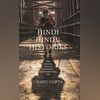 "Exploring caste, Ayurveda, communism via biographies of forgotten rebels")










 Connect with us on WhatsApp