Plant Thinkers of Twentieth-Century Bengal
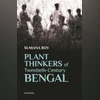
Author: Sumana Roy
Publisher: Oxford
Pages: 204 Price: ₹995
Sumana Roy has chosen to title the introductory chapter of her book “Phloem” rather than Preface or Introduction. Choosing this noun instead of the more functional descriptors is unusual, but not if you are a botanist by training or an avid follower of Roy’s writings, enriched as they are with the idea of celebrating plants as living beings. Phloem means the “material in a plant containing very small tubes that carry sugars produced in the leaves around the plant”.
A preface helps convey to the reader the key elements of a book. Phloem plays a similar role for Plant Thinkers of Twentieth-Century Bengal. In effect, Roy’s insightful choice of the title for the preface helps her lay the groundwork for effectively conveying to the readers the book’s central theme — the role that plants play in human creativity.
As a poet and fiction writer, Roy is widely known for her empathy and deep connection with plants or non-living objects. In one of her recent interviews, she had confessed that she would often say “Thank You” to the automated teller machine after drawing cash from it or say “Sorry” to the laptop after accidentally slamming it shut.
This book is not about her intense relationship with plants or non-living objects but it is deeply influenced by that worldview. It builds on her spirit of empathising with non-living objects to examine a trend noticeable among leading writers and intellectuals of Bengal in the twentieth century. In a period of just about one hundred years, Bengal saw the emergence of a group of powerful writers who delved into the world of plants and their impact on the lives of men and women.
Roy, therefore, clubs under one umbrella half a dozen creative geniuses of Bengal who were quite diverse in their temperament and literary pursuits. But what united them was their treatment of plants in their writings. Thus, Roy presents an evaluation of what inspired Jagadish Chandra Bose, a scientist who had discovered the presence of life in plants but was also a formidable non-fiction writer in Bangla. Similarly, she explores the factors that could have driven the plant-centric literary pursuits of Rabindranath Tagore, Bibhutibhushan Bandyopadhyay, Jibanananda Das, Satyajit Ray and Shakti Chattopadhyay. Rarely has literary criticism used such a lens to analyse the works of some of Bengal’s finest writers. In that sense, Roy’s book makes a path-breaking contribution to the rich tradition of critical appreciation in Bangla literature.
A remarkable feature — a common link connecting almost all the plant thinkers under study in this book — is their close connections with the Brahmo Samaj. Except Chattopadhyay, who was hailed as a green poet, having raised concerns over the crisis faced by nature, all others — Bose, Tagore, Das and Ray — were deeply influenced by the Upanishadic ways of thinking and living because of their families’ close connections with the Brahmo Samaj. Roy argues that the influence of this Upanishadic creed perhaps made them explore the world of trees around them with empathy and as an extension of human life.
She notes that these writers were neither environmentalists nor did they consciously plan to write about trees.
Yet, their writings explored that apparently invisible connection between trees and human lives. It was not an environmentalist’s concern that drove their creativity, but their desire to portray the world through people and the habitat around them. There is also a suggestion in her analysis that these writers of Bengal, perhaps among many others in different languages, were the early messengers who raised human awareness about the crisis faced by nature, trees and plants. And quite unnoticeably, they may have fuelled the movement for preserving the environment. It appears that Roy’s endeavour in the book is to portray that link.
Extensively researched, the book relies on the original writings of Bose, where he enunciates ideas of plant life. The idea of a Torulipi, or the plant script, was an attempt at gauging the plant’s stimuli to external factors through their own responses. Plants must tell their own stories, Bose had argued. This is reminiscent of Chinua Achebe’s call for lions to become their own historians to provide an alternative to the traditional history where the story of hunting always glorifies the hunter. There is also an element of empathy that Bose employed to understand the plant responses. Tagore described Bose as his Prothom Bandhu, or first friend, who saw in nature, including flowers and leaves, the manifestation of the universe’s supreme power. Bose, according to Tagore, was not just a botanist but a plant philosopher, who could hear their “wordless melody”.
Examining the plant-centric writings of Tagore, Roy makes a perceptive comment on how his first poem refers to plants. Tagore’s famous lines — Jawl Pawrey, Pata Nawrey (water falls, leaves move) — are as powerful an evidence of his plant philosophy as his efforts at making Santiniketan a veritable garden of plants and flowers. Remember that local people at Santiniketan would often refer to the place as a bagaan, or garden.
Bibhutibhushan Bandyopadhyay’s engagement with plants was even more intense. Through the detailed depiction
of forests and the delineation of Apu’s intellectual fascination for trees and his desire for returning to nature in Aparajito, Bandyopadhyay leaves nobody in doubt about his care and empathy for plants. Many years later, Satyajit Ray would make three films — the famous Apu trilogy — to explore the same theme with added cinematic effect. Of course, Ray goes deeper into plant life by presenting them as complex and complicated as humans are.
In a slightly different manner, Jibanananda Das’s poetry brings out nature’s bounty, munificence and variety as seen in trees and flowers that most humans otherwise would ignore. His poems have immortalised many forgotten flowers and plants of Bengal, and have imbued them with meanings that offer lessons in life and living. No surprise that in the words of Buddhadev Bose, Das was a natural poet and a poet of nature. It is a pity that Shakti Chattopadhyay’s poems on plants have not received the kind of critical acclaim they deserve. His poem, Paata Aar Phooler Gawlpo (The Story of Leaves and Flowers), is a tribute to plants, and is as poignant as his other poem — Abani, Baari Aacho? (Abani, Are You At Home?).
The highlight of Roy’s book is the last chapter called Anonymous. This is about Maya Maashi (Aunt Maya), a domestic worker whose association with plant life is more intense than perhaps many of the writers in this book. One of her sons is named Jongol (jungle). Often during her work, she would utter phrases that are deeply connected with the plant world. Maya Maashi saw herself as a weed, but reminded Roy’s mother that a weed was also a plant. It, however, remains a puzzle that despite Maya Maashi’s deep understanding of the plant world, the title of the chapter is Anonymous. Maya Maashi need not be anonymous. Indeed, her role in enhancing plant consciousness should be as important as that of the six writers featured in




