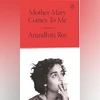
Mother Mary Comes To Me
by Arundhati Roy
Published by
Penguin
386 pages₹899
The noise surrounding Booker Prize-winning author Arundhati Roy’s new book Mother Mary Comes To Me — the title comes from the hit song “Let It Be” by The Beatles —is quietening down. What a relief! One can now turn the pages and meet the words on their own terms instead of being swept away by the marketing blitzkrieg that positioned the book as a publishing event rather than a literary document. Turning an iconoclast into an icon is the ultimate disservice but that’s the template that seems to work in an industry that struggles to sell.
Ms Roy is fortunate to have a problem that most Indian authors cannot even dream of. “As I travelled in the Narmada Valley, meeting people whose lives, lands and histories had been or were going to be submerged, desperately poor people facing complete erasure, I felt a little guilty and embarrassed that my book (The God of Small Things) was selling in millions around the world and my bank account was burgeoning,” she confesses. However, she was unwilling to become “a saintly benefactress”, so she started a trust to share her “crazy royalties” with people “who don’t know how to or don’t want to make smooth proposals that massage the NGO machine”. Winners of big literary prizes rarely talk with such openness about their wealth.
Ms Roy’s radical and radiant life is the subject of the book but the messaging around it has flattened a complex narrative into a sob story of a daughter wronged by her mother. It has a lot more to offer. “I truly believed she would outlive me. When she didn’t, I was wrecked, heart-smashed. I am puzzled and more than a little ashamed by the intensity of my response,” writes Arundhati allowing the reader to witness her mixed feelings about her mother—Mary (founder of a school called Pallikoodam, and known for challenging the Travancore Christian Succession Act of 1916) — who once told her how miserable she was when she was pregnant with Arundhati. Her first baby was only nine months old when the second child was on the way.
It must take a lot out of a child to feel compassion for a mother who says, “I wish I had dumped you in an orphanage.” Mary told her daughter that she “tried to induce an abortion” by eating lots of green papaya and using a wire coat hanger. Ms Roy writes, “I sensed that she was warning me about drifting into a life of marriage and children without thinking it through carefully. I felt terrible for her.” This is love in action, a refusal to engage in mother worship, yet a profound recognition of how challenging life is for an Indian woman with an alcoholic husband.
Ms Roy does not refrain from acknowledging the gifts that her mother “bestowed”—the education that she got, the class that she belonged to, and the fact that she spoke English. Even when Ms Roy chose to leave her mother behind in Kottayam and move to Delhi, these gifts “protected” the author and gave her “options that millions of others did not have”. She is able to express gratitude, without feeling the need to condone all of her mother’s cruelty. This approach is what’s most endearing about this book, which does not believe in heroes and villains.
Ms Roy’s relationship with filmmaker and environmentalist Pradip Kishen forms a major part of the book, and will put an end to unnecessary speculations about her private life. More interesting are the brief accounts of her meetings with architect Laurie Baker and art critic John Berger. She describes the former as “a conscientious objector in the Second World War, who, deeply influenced by a chance encounter with Gandhi, moved to India in 1945”. As a child, she met him when he began to design the campus of the school that her mother set up. She writes, “Watching Baker’s buildings grow out of the earth almost like trees and plants fascinated me. I learned that design could evoke the same kind of joy in me as music, dance and literature.” No wonder that Ms Roy decided to study architecture, and her love of it continues to this date. When Mary died, Arundhati felt that cremating her or immersing her ashes in the Meenachil river was not enough. She wanted to make her “a grove instead of a grave”.
The section where Berger, author of the seminal Ways of Seeing, appears is far from sombre. Ms Roy writes about the time he helped her buy lingerie for her mother in Italy. She recollects, in a memorable passage that offers respite from the heaviness of the rest of the book, “Each time we entered a shop, I hung back to experience the sheer delight of watching the extremely handsome eighty-something man say in his British-accented Italian, ‘Excuse me, could you show us what you have in size 44DD?...I occasionally allowed myself these weird, secret games.” This is a book that deserves to be read, for its invitation to find joy in the midst of pain.
The reviewer is a journalist, educator and literary critic. Instagram/X: @chintanwriting