Rakesh Batabyal's 'Idea of Order' examines European history, nationalism

Professor Batabyal's Indian perspective on this most recent period of European history is obviously relevant for his home audience, but the European public can also learn from it

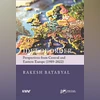
IDEA OF ORDER: Perspectives from Central and Eastern Europe (1989-2022)
Philipp Ther
5 min read Last Updated : Mar 18 2025 | 11:27 PM IST
IDEA OF ORDER: Perspectives from Central and Eastern Europe (1989-2022)
Author: Rakesh Batabyal
Publisher: KW Publishers
Pages: 227
Price: ₹1,680
  Rakesh Batabyal has published his book at the right moment, when the European and global order created after the fall of the outer Soviet Empire in 1989 and of the Soviet Union in 1991 has broken down. From February 2022, Europe has been engulfed in the largest war since 1945, and because of the recent concessions by the Trump administration to Russia, the risk of an even greater war has increased. In the Baltic states, in Poland, Moldova, and even in Bosnia-Herzegovina and Kosovo the question that is gaining traction is: Are we going to be the next object of military aggression? A larger war in Europe would affect at first the new EU member-countries upon which Professor Batabyal focuses.
 
It is always regrettable when a country or a continent attracts attention because of a crisis or a war. But research on this book began presciently, before the European order created in 1989-91 was heavily damaged. Professor Batabyal’s Indian perspective on this most recent period of European history is obviously relevant for his home audience, but the European public can also learn from it. As the author writes, it was one of the great achievements of the European Union (EU) that it took in almost all members of the Soviet-dominated Warsaw Pact in several periods of enlargement and thus brought stability to a part of the continent that was always ruled by or squeezed between continental empires. Central and Eastern European countries were keen to join the EU because they did not want to serve as a cordon sanitaire against Bolshevism, as they did during the interwar period, or be subjugated by Soviet Russia (a preferable term for the period since Stalin rose to power, because it better reflects Russian hegemony than the official “Soviet Union”) as they were in the postwar period. This is also the reason the small Baltic Republics wanted to join the North Atlantic Treaty Organization (Nato).
 
The fundamental right of independent countries to join any international alliance is now being fought over in the full-scale Russian invasion of Ukraine. The tragedy of Ukraine and its anti-imperial, and in parts anti-colonial, struggle lies in the fact that it has recently been abandoned by the Trump administration. As Professor Batabyal rightly observes, the current Russian war against Ukraine revives old memories and fears especially in Romania, which was ruled by the Russian Empire as a “protectorate” in parts of the 19th century, and even more so in Poland, which was ruled by Russia in most parts of its territory in the entire 19th century and subjugated as a whole by Soviet Russia after World War II.
 
Although the book restricts itself to the most recent period of contemporary history in the title, it invokes much longer lines of history, sometimes going back to mediaeval times. The author recognises the legacy of imperial rule in Central and Eastern Europe, and the strong nationalist counter-reaction it brought about. It is one of the major achievements of his book that it chose to focus, in the tradition of Norman Davies (and his seminal  Europe: A History, published in 1996), Mark Mazower ( Dark Continent, 1998) and my own book ( Europe since 1989. A History, 2016), on this part of the continent, and not on Western Europe and the UK, which for understandable reasons has been of much deeper interest for India.
 
Nationalism has been a key element of the revolutions of 1989 and of the disintegration of the Soviet Union. Professor Batabyal rightly attests to a revival of nationalism as a counter-reaction to European integration, neoliberal globalisation and, most recently, Russian neo-imperialism. I am not sure whether Russian imperial nationalism can be understood mostly as a reaction against Western hegemony, since it was always present as an active force even at the peaks of Russian and Soviet imperial power. Nevertheless, the author rightly points to the negative effects of EU enlargement on Russian trade ties with Central and Eastern Europe. He stresses the danger of fragmentation through economic nationalism, which is on the rise all around the world since the global financial crisis of 2008, and the right wing turn in 2016.
 
Another strong argument in the book is the revival of the state, which was scorned by neoliberal reformers and is now being intentionally weakened by the Trump administration. Central and Eastern Europe has been moving into a different direction. The state has been strengthened, first reacting against the fallout of the global financial crisis, which hit Eastern Europe particularly hard, then against the Covid-19 pandemic. However, the infringement of basic freedoms has fuelled anti-statist attitudes, and in the US, an old libertarian enmity against the state. One of the key successes of the reforms in Central and Eastern Europe, which was significantly enhanced during the EU enlargement, was making the state more effective. However, a strengthened state can be a mixed blessing if it is captured by authoritarian leaders, as it has in Russia or Hungary, which also have been sliding back into large- scale corruption.
 
Another key strength of the book, which makes it worth reading for insiders from this part of Europe, is its focus on religion. Professor Batabyal has observed in his study and on field trips rising political invocation and abuse of religion. Here the book contains quite a few lessons for South Asia, and of course Russia, which leads its war against Ukraine with full backing of the Russian Orthodox Church.
The reviewer is the director of Research Center for the History of Transformations (RECET) at the University of Vienna

One subscription. Two world-class reads.

Already subscribed? Log in

Subscribe to read the full story →
*Subscribe to Business Standard digital and get complimentary access to The New York Times

Smart Quarterly

₹900

3 Months

₹300/Month

SAVE 25%

Smart Essential

₹2,700

1 Year

₹225/Month

SAVE 46%
*Complimentary New York Times access for the 2nd year will be given after 12 months

Super Saver

₹3,900

2 Years

₹162/Month

Subscribe

Renews automatically, cancel anytime

Here’s what’s included in our digital subscription plans

Exclusive premium stories online

  • Over 30 premium stories daily, handpicked by our editors

Complimentary Access to The New York Times

  • News, Games, Cooking, Audio, Wirecutter & The Athletic

Business Standard Epaper

  • Digital replica of our daily newspaper — with options to read, save, and share

Curated Newsletters

  • Insights on markets, finance, politics, tech, and more delivered to your inbox

Market Analysis & Investment Insights

  • In-depth market analysis & insights with access to The Smart Investor

Archives

  • Repository of articles and publications dating back to 1997

Ad-free Reading

  • Uninterrupted reading experience with no advertisements

Seamless Access Across All Devices

  • Access Business Standard across devices — mobile, tablet, or PC, via web or app

Topics :Book readingBOOK REVIEWBS ReadsEuropeEuropean Parliament

Next Story