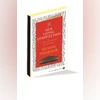
Shashi Tharoor's book offers a partisan polemic on the Constitution

Tharoor's book glosses over how some senior Congress leaders in the 1940s and 1950s were uneasy with Hinduism not getting what they felt was due recognition in the Constitution

book
Shreekant Sambrani
5 min read Last Updated : Jun 02 2025 | 10:18 PM IST
Our Living Constitution: A concise introduction & commentary
by Shashi Tharoor
Published by Aleph Books
xiv+118 pages ₹499
 
School syllabi in the mid-1950s had a subject called civics. It dealt with administration systems and processes and the principles they were based on — quite clearly, the Constitution. The prescribed texts were well-written, with simple explanatory diagrams of reporting and hierarchical relations.
 
The reason for recalling this is that nearly the entire first half of Shashi Tharoor’s latest work under review resembles those texts, but is not as succinct or lucid as those volumes, probably committee-written, were. Mr Tharoor rambles on stressing repeatedly the uniqueness of India as a nation as well as its constitution writing exercise. Dr B R Ambedkar is invoked in reverential terms (as he should be) and quoted extensively.
 
All of this is common knowledge, especially so in the last six months as we observed the 75th anniversary of giving ourselves the Constitution.  In case you missed it, a quick reference to Wikipedia will tell you all that Mr Tharoor does in the first 47 pages of his rather slim volume, and with much less verbiage.
 
One does not have to wait long for the reason for Mr Tharoor to retell this oft-told tale.  Phrases such as the idea of India and India as a well-established secular state keep appearing page after page.  References to select members of the Constituent Assembly (the author often calls them Founding Fathers, a term usually reserved for the signatories of the American Declaration of Independence, with good reason), most of them belonging to the Indian National Congress, in adulatory terms, abound.
 
In case the reader is still at sea about why this book was written, two chapters entitled “An alternative idea of India”, and “A challenge to the Constitution” in the middle of the book clear all doubts.  Mr Tharoor dwells on the Hindu Mahasabha opposition to the Constitution at the time of its drafting.  He also talks of the Hindu-Hindutva ideologues V D Savarkar, M S Golwalkar and Deen Dayal Upadhyaya and their negative reactions to the Constitution: “Upadhyaya saw the seeds of division …even in the Constitution’s decision to rename provinces as ‘states’…he felt the formulation envisaged in the Constitution diluted the sacred idea of a unified Bharatvarsha.”
 
Mr Tharoor suggests that the ideological descendants of these critics, now in power, are still not reconciled to the secular nature of the Constitution.  He could well be justified in believing this, but in the absence of any reasoned arguments, this remains just a shibboleth voiced by the current leadership of his party.  He glosses over the fact that many senior Congress leaders in the 1940s and 1950s were uncomfortable with Hinduism not being accorded what they considered its due importance in the Constitution and by the actions of the Jawaharlal Nehru governments of the 1950s. The President of the Assembly and later the first President of the Republic, Rajendra Prasad, and a Congress president, P D Tandon, were among such personages.  The short point is that unlike universal adult franchise, secularism was not yet an idea whose time had come then.  But Mr Tharoor states quite emphatically that secularism was very much an integral part of the Constitution at all times, even though it was expressly inserted in the Preamble only during the Emergency through the 42nd amendment.
 
Mr Tharoor is agitated by the passage of the Citizenship (Amendment) Act, the National Register for Citizenship and the Waqf Act amendment initiated by Bharatiya Janata Party -led governments in the last five years.  He believes they affect the very fabric of the Constitution.  Again, this point is vital in any debate on the Constitution, but to Mr Tharoor the existential threat to the Constitution is real and must be fought, which is very much the posture of the Congress.
 
Mr Tharoor cherry-picks his arguments.  He quotes the renowned constitutional scholar Dr Gautam Bhatia on citizenship, but not on the overall centralising drift of the Constitution, which tends to favour the government in power.  He could have used the dispassionate writings of scholars such as Faizan Mustafa on the recent trio of measures.  His tone switches from that of Chicken Little, who feared the sky was falling (the Constitution is under threat!), to the benign soothsayer:
 
“The Constitution will prevail as long as its spirit survives in the ordinary citizens of India”.
 
That is when the book reveals what it truly is: A polemic on the Constitution, and not “compelling narrative” about it, as it claims. Stylistically, the book has all of Mr Tharoor’s flourishes: Alliterations, long (50+ words) sentences, equally long paragraphs, repetitions of words — all the bugbears an analytical writer is told to avoid.  The book does have one plus point: It carries footnotes and citations where they ought to belong, at the bottom of the page.
 
Post-script: One wonders what the author Mr Tharoor who goes to extraordinary lengths to toe the party line feels about the politician Mr Tharoor being excoriated by the same party for his eloquent defence of government policies in the wake of Operation Sindoor!
 
 
The reviewer is a Vadodara-based economist
 

One subscription. Two world-class reads.

Already subscribed? Log in

Subscribe to read the full story →
*Subscribe to Business Standard digital and get complimentary access to The New York Times

Smart Quarterly

₹900

3 Months

₹300/Month

SAVE 25%

Smart Essential

₹2,700

1 Year

₹225/Month

SAVE 46%
*Complimentary New York Times access for the 2nd year will be given after 12 months

Super Saver

₹3,900

2 Years

₹162/Month

Subscribe

Renews automatically, cancel anytime

Here’s what’s included in our digital subscription plans

Exclusive premium stories online

  • Over 30 premium stories daily, handpicked by our editors

Complimentary Access to The New York Times

  • News, Games, Cooking, Audio, Wirecutter & The Athletic

Business Standard Epaper

  • Digital replica of our daily newspaper — with options to read, save, and share

Curated Newsletters

  • Insights on markets, finance, politics, tech, and more delivered to your inbox

Market Analysis & Investment Insights

  • In-depth market analysis & insights with access to The Smart Investor

Archives

  • Repository of articles and publications dating back to 1997

Ad-free Reading

  • Uninterrupted reading experience with no advertisements

Seamless Access Across All Devices

  • Access Business Standard across devices — mobile, tablet, or PC, via web or app

Topics :Book ReviewsBook

Next Story