David C Engerman looks at six S. Asian economists who shaped their nations

Of the Apostles still with us, there are few intersections between them and age-related constraints on all
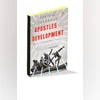
Apostles of Development: Six Economists and the World They Made
Sanjeev Ahluwalia
5 min read Last Updated : Jun 01 2025 | 10:53 PM IST
David C Engerman, an accomplished historian of contemporary economic development, is no stranger to South Asia. His 2018 book titled  The Price of Aid, documents how India used the leverage provided by Cold War rivalries to manage the flow of foreign aid in line with its needs. The chosen entry point for this book is six eminent South Asian economists, all of whom graduated from Cambridge University. The term “Apostles” is a riff on a 19th century secret society — the Cambridge Apostles.  John Maynard Keynes was a member and Lal Jayawardene from Sri Lanka followed. The other five Apostles are Nobel Laureate Amartya Sen, Jagdish Bhagwati and Manmohan Singh from India, Mahbub ul Haq of Pakistan, and Sobhan Rehman of Bangladesh. 
The 19th century neoclassical reliance on markets for efficient allocation of resources was challenged by the great depression of the 1930s when markets did not self-correct. In response, Keynesianism advocated government activism to smooth market fluctuations through taxes and social spending. Under the watchful eye of the redoubtable Joan Robinson this became the dominant economic philosophy the Apostles encountered in the late 1950s.
  Amartya Sen became the protagonist for state activism in education and health and for investing in human development — an approach that was implemented by Haq, who embedded basic human needs as a building block for development in the United Nations Development Programme (UNDP) and later constructed the human development index.
  In the early 1970s a seminal joint publication of the World Bank and the Institute of Development Studies, Sussex, titled “Redistribution with Growth”, drew on work by the International Labour Organisation on unemployment, to collate “state of the art” research for designing  policies that would use growth dividends for financing development, even as the International Monetary Fund (IMF) structural adjustment programmes sought to keep fiscal deficits, public debt and inflation in check through liberalised and deregulated industrial production and trade.
  Only three Apostles are with us. There is Amartya Sen, whose body of work and philosophy, puts human development and equity as the purpose of economic growth. Then there is the feisty, United States-based Bhagwati, an indefatigable exponent of growth-boosting liberalisation, deregulation, globalisation, and international trade. And Rehman, the only Apostle who received his first degree in economics at Cambridge and the only one to never pursue a doctorate. His early socialistic convictions and the economic marginalisation of East Pakistan, before its liberation in 1971, shaped his view that economic discrimination is a primary constraint on development. He was prescient in “plumbing” the micro-economy, now the dominant trend, as non-government partners proliferate whilst rigidities constrain state capacity reform.
  Haq was Pakistan’s finance minister twice, in 1986 and 1988. The most entrepreneurial Apostle, he excelled in embedding evolving economic theory into multilateral programme implementation. He evangelised the measurement of human well-being, beyond economic metrics, to ensure that economic growth also meets basic human needs by devising the human development index in 1990 for the UNDP. Sadly, he was the first to pass on in 1998.
  Lal Jayawardene, scion of a storied Sri Lankan family, was a founding staff member of the United Nations Conference on Trade and Development in 1964 to be joined later by Manmohan Singh. An active member of the UN’s Group of 77 and the IMF’s Group of 25, he advocated the New International Economic Order proposals, adopted by the UN in 1977, proposing fairer terms of trade for primary producers, transfer of technology and greater voice for the Global South. He helmed the World Bank-supported Global Development Network which, sadly, remained stillborn.
  Manmohan Singh stood apart from the Apostles. Unlike them he came from a family of modest means and spent his time at Cambridge studying, rather than socialising or in debating clubs. He chose to apply economic theory to government policy in India, in contrast to the pursuit of academics by Bhagwati and Sen, global economic diplomacy by Haq and Jayawardene and grassroots activism by Rehman. Singh represented a synthesis between the hard­line liberalisation and trade deregulation of Bhagwati— who cheered India’s 1991 liberalising economic reforms—and the social consciousness of Sen—who cheered the rights legislation extending access to information, food and work passed by Singh’s government. Attuned to the virtues of moderation he honed his ability to tweak the minutiae of reforms to enhance political acceptability. Whilst political fortunes are independent of professional excellence, his terms as finance minister (1991-96) and Prime Minister of India (2004-14) were definitive in implementing growth enhancing liberalisation and reforms with a human face.
  Of the Apostles still with us, there are few intersections between them and age-related constraints on all. The good news: the evolutionary energy of economics is creating such intersections, as macroeconomic rigidity bends to microeconomic creativity, and pervasive state action to dispersed economic initiatives by autonomous, frequently private, actors. All of this augurs well for sustainable growth and human development. 
  The reviewer is distinguished fellow at the Chintan Research Foundation and was in the IAS and World Bank

One subscription. Two world-class reads.

Already subscribed? Log in

Subscribe to read the full story →
*Subscribe to Business Standard digital and get complimentary access to The New York Times

Smart Quarterly

₹900

3 Months

₹300/Month

SAVE 25%

Smart Essential

₹2,700

1 Year

₹225/Month

SAVE 46%
*Complimentary New York Times access for the 2nd year will be given after 12 months

Super Saver

₹3,900

2 Years

₹162/Month

Subscribe

Renews automatically, cancel anytime

Here’s what’s included in our digital subscription plans

Exclusive premium stories online

  • Over 30 premium stories daily, handpicked by our editors

Complimentary Access to The New York Times

  • News, Games, Cooking, Audio, Wirecutter & The Athletic

Business Standard Epaper

  • Digital replica of our daily newspaper — with options to read, save, and share

Curated Newsletters

  • Insights on markets, finance, politics, tech, and more delivered to your inbox

Market Analysis & Investment Insights

  • In-depth market analysis & insights with access to The Smart Investor

Archives

  • Repository of articles and publications dating back to 1997

Ad-free Reading

  • Uninterrupted reading experience with no advertisements

Seamless Access Across All Devices

  • Access Business Standard across devices — mobile, tablet, or PC, via web or app

Topics :Book readingBOOK REVIEWBS ReadsSouth AsiaEconomists

Next Story



