THE POLITICAL THOUGHT OF XI JINPING
by Steve Tsang and Olivia Cheung
Since the establishment of the People’s Republic of China under Chinese Communist Party (CCP) there have been efforts by every leader to leave an indelible mark on the history of the party, Chinese politics and society. Since Mao Zedong and Deng Xiaoping, no one has come close to achieving this feat — but Xi Jinping is definitely serious about being the next one to do so.
The primary goal of Xi Jinping Thought is to make China great again and is driven by the agenda that the ultimate goal is “… to create “one state, one people, one ideology, one party, and one leader”. The book argues that “Xi intends his Thought to guide the Party in steering the country”. Thus, for anyone wishing to understand China, a deeper and nuanced study of the Xi Jinping Thought is essential.
What Xi has achieved primarily is “pushed through structural and ideological changes to strengthen the Party’s leadership over the state” and move towards a more Leninist party structure. In China, however, the party was always more powerful than the state; Xi is merely intensifying this power paradigm. The sanctity of ideology is critical for him as he reiterates that “the Party is a communist party not only in name but also in reality,” marking a clear shift from Deng Xiaoping’s justifications for economic reform and liberalisation.
There is also an attempt to sanctify and rebuild the historical narrative. Xi has consistently underscored his love of Chinese history. Thus, the push to make China great again is a nostalgic and nationalistic notion rooted in Xi’s “Rejuvenation of the Chinese Nation”. He has strategically weaponised the idea of history by introducing the concept of “historical nihilism”, which makes it almost blasphemy for anyone to contradict and challenge the idea of history promoted by the Party.
Xi Thought also focuses on the Chinese people and their role is defined under the concept of “arming the brain”. This basically implies that, “loving the Party and the nation are the same thing, and something that any hot-blooded Chinese patriot must do”. He also asserts that scientists need to be patriots first and scientists second. To push the Party narrative and suppress dissent, there has been an intensification of high-tech mass surveillance of the Chinese people. Under Xi, the Party demands from its citizens an active defence of the regime’s security and an acceptance of more intrusive party control over their lives. He is also grooming the education system to strengthen the “bond between the students and the party-state”. The authors argue that Xi has modified the social contract and it applies to when the Chinese citizens have been re-educated to become “patriotic Chinese”. Thus, loyalty to the party is non-negotiable.

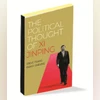 "The Political Thought of Xi Jinping: Party's history beyond question")












 Connect with us on WhatsApp