The Feminisms of Our Mothers: How one woman's step sparked progress

This anthology successfully subverts the social dynamics of men and women in patriarchy, and centres women as the subjects of their exploration
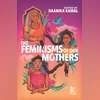
The Feminisms of Our Mothers 
Akankshya Abismruta
5 min read Last Updated : Apr 24 2025 | 11:47 PM IST
The Feminisms of Our Mothers 
Editor: Daanika Kamal
Publisher: Zubaan Books
Pages: 204
Price: ₹595   
This book is a collection of 20 essays written by various lawyers, civil servants, human rights advocates, public figures, academics and influencers of Pakistani descent. It explores the “experiences and interpretations of what feminism may mean to Pakistani women through reflective conversations on the joys and conflicts of mother-daughter relationships, offering a lens through which our own feminisms are understood within the intergenerational context of a shared struggle”.  These essays connect women across generations who witnessed two very different women’s movements in Pakistan in 1983 against the Law of Evidence, which sought to diminish women’s testimony to half of that of a man under the military dictatorship of Zia ul Haq, and the “Aurat March” in 2018, to demand greater accountability for violence against women alongside the #MeToo movement. 
More often than not, these essays read like short stories, as the authors invite readers to intimately explore the hierarchies within a household across generations that clip the wings of women. These domestic spheres become spaces of constant injustice and disrespect, which ultimately creates a desire for independence in women, if not for themselves then for the next generation. Taking such generational trauma and rage into account, Maria Amir subverts the patriarchal notion of women as containers of shame, honour, pain, judgement, etc, in “All Women in Me are on Fire”. She theorises women as circles and squares to broadly distinguish the portrayals of mothers in the collection. She writes: “For the women of the circle, pain is legacy, and legacy must always be passed down. The women of the square carry their own boxes to put pain into. These boxes remain in the attics of memory and are not passed on.” 
The book cover illustrated by Samya Arif demands attention as a visual narrative, much like the lives of women and their resistance to patriarchy. In the gradient hues from purple to orange, Arif shows women weaving the hair of women of the next generation. This illustration is representative of the interwoven tapestry on which the present-day women exercise their agency to tell their stories — the eyes that were once lowered and closed in the past are open and are confidently gazing straight ahead. It invites the reader into the anthology in which the authors are aware of their lineage and inheritance (or the lack thereof) of feminism. Ms Arif states: “In creating this artwork, my aim was for those who read the book to reflect on the transition and transmission of feminist ideas as they move from one generation to the next, and to find joy, connection and solidarity within the interwoven tapestry of Pakistani Feminisms.”
  As these forward-gazing plausible-millennial writers put their family stories across, they are fully aware of their position as chroniclers. In “(Un)Mothering”, Tooba Syed expresses: “I am not sure these stories are mine to tell. But I also know that if I don’t tell them, they will remain untold. And their protagonists will remain invisible.” They grieve the lives their mothers couldn’t live when marriage was prioritised over education, when freeing maternal homes were replaced by repressing marital households. They express their gratitude towards the women in their homes, the ones who took care of them, fought silent battles, and stood up for their daughters in ways they wished someone had spoken up for them.
  Strangely, and hopefully intentionally, men do not take up space in these essays. Their roles, even in cases of physical abuse, are in the periphery.  
This anthology successfully subverts the social dynamics of men and women in patriarchy, and centres women as the subjects of their exploration. The essayists show how various forms of consumption impacted their mindset and showcased possibilities beyond their lived reality — these sources included childhood photos of their mothers, popular magazines and books in 1990s and 2000s, literary figures such as Deborah Levy and Ismat Chughtai, Instagram pages such as Feminustani, and Humsafar, the famous Pakistani TV serial. This amalgamation of popular and literary culture makes these essays an invigorating read.
  This anthology also calls out abusive mothers and the entire notion of motherhood at large in the feminist movements. The authors thoughtfully and empathically portray their interpretations of petty and jealous mothers by looking at the reality of the glorified concept of sacrifice. Suraiya Anjum in “Lemons are also a Fruit” writes: “These sacrifices, that people pretend are great things women do, turn women into bitter creatures…. In private moments of self-reflection, in tinges of jealousy when she sees herself in the image of her daughter, a young carefree woman emerges, put to sleep long ago, yearning to go back in time and to achieve what she wanted.” Mothers, then, become as flawed as the next human instead of being suffocated into a sanctified image of selflessness. In “When They Suffocate”, Zoya Rehman writes about her mother as their relationship improves: “She seems to have forgotten how abusive she was towards me. Selective amnesia is her way of dealing with my resentment, to silence my hushed rage.”
  The Feminisms of Our Mothers shows how one woman’s small step towards living a self-respecting and independent life can turn into privileged step towards progress for the next generation. The book portrays the lives of significant voices that resist patriarchy during the “Aurat March” and it also cuts through the darkness between Indian readers and Pakistani authors — underscoring universal shared experiences of repression and freedom, creating solidarity across the border.
  The reviewer is an independent writer based in Sambalpur. She is @geekyliterati on Instagram and X
 

One subscription. Two world-class reads.

Already subscribed? Log in

Subscribe to read the full story →
*Subscribe to Business Standard digital and get complimentary access to The New York Times

Smart Quarterly

₹900

3 Months

₹300/Month

SAVE 25%

Smart Essential

₹2,700

1 Year

₹225/Month

SAVE 46%
*Complimentary New York Times access for the 2nd year will be given after 12 months

Super Saver

₹3,900

2 Years

₹162/Month

Subscribe

Renews automatically, cancel anytime

Here’s what’s included in our digital subscription plans

Exclusive premium stories online

  • Over 30 premium stories daily, handpicked by our editors

Complimentary Access to The New York Times

  • News, Games, Cooking, Audio, Wirecutter & The Athletic

Business Standard Epaper

  • Digital replica of our daily newspaper — with options to read, save, and share

Curated Newsletters

  • Insights on markets, finance, politics, tech, and more delivered to your inbox

Market Analysis & Investment Insights

  • In-depth market analysis & insights with access to The Smart Investor

Archives

  • Repository of articles and publications dating back to 1997

Ad-free Reading

  • Uninterrupted reading experience with no advertisements

Seamless Access Across All Devices

  • Access Business Standard across devices — mobile, tablet, or PC, via web or app

Topics :Book readingBOOK REVIEWBS ReadsFeminismmotherhoodPakistan

Next Story



