THE HOUSE OF AWADH: A Hidden Tragedy
Authors: Aletta André & Abhimanyu Kumar
On March 28, 40 years ago, a curious family moved into Malcha Mahal. Believed to have been built by Firoz Shah Tughlaq, the 19th sultan of Delhi, in the 1300s as a hunting lodge, it was by then a decrepit, decaying monument deep inside New Delhi’s Ridge Forest. The family — a woman who called herself Princess Wilayat Mahal, and her two children, a young woman named Princess Sakina and a young man who went by Prince Ali Raza — claimed to be the last surviving descendants of Wajid Ali Shah, the Nawab of Awadh.
For nearly a decade before taking residence in Malcha Mahal, after the Indian government awarded it to them, the three had lived in the VIP waiting room of New Delhi railway station with their “royal” paraphernalia, their dogs, and a manservant. Until the last member of the family, Ali Raza, died in 2017, they continued to demand that “their” palaces in Lucknow be returned to them.
So intriguing was their story and so mysterious were their lives— as they isolated themselves in that forest of kikar trees, monkeys and djinns, choosing not to mingle with “commoners” and making do without electricity or running water in the heart of India’s vibrant capital — that they attracted journalists from across countries.
Were they really royalty? Were they a family wronged? Were they delusional? Or were they simply imposters?
There was all kinds of speculation. The family would largely meet only foreign journalists, and Wilayat Mahal would wish to be photographed only on moonlit nights. Within Delhi, curious youngsters would risk being shot at or have a hound set after them to catch a glimpse of this enigmatic family.
Article upon article was written about them, and yet so little remains known. It was then natural to wonder if The House of Awadh would finally put those questions to rest, and reveal the reality of Begum Wilayat Mahal and her children. It does not. What it does is far more.
Through the prism of memory, history, and identity, the book weaves a story that travels from that forest of Delhi to Kashmir to Kolkata to Pakistan to Nepal. With intrigue at the heart of it, and the family as the hook, it takes the reader back in time to the events that transpired in the 1850s, which would shape India’s fate and its trajectory. The significance of Awadh and its annexation in 1856; the 1857 revolt that followed, after which the British government abolished the East India Company and took direct control of India; a brave, headstrong begum of Awadh who stood up to the British, and travelled with her entourage to London to meet the queen and get her kingdom back; and more than a century later, a self-proclaimed begum of Awadh who arrived in Delhi, this time to reclaim “her” palaces from the Indian government — the book presents a fascinating web of stories.
But, again, it does more. Rather than clinically investigating it, it makes a sincere, sensitive effort to understand this family beyond the curiosity it aroused, and beyond the questions around its claim to royalty.
What is true? What is false? What is real? What is imaginary? As they try to piece together an elusive jigsaw puzzle through whatever clues they find, which every now and then lead them to a blind alley, the authors delve deep into these questions in their exploration of human memory and what shapes it. “Between the truth and lie, lies the abyss of memory,” they write. It is in this abyss that Begum Wilayat Mahal and her children reside.
The authors also take down a rather pompous New York Times article published two years after Ali Raza’s death in the last week of September 2017, which in effect said that Wilayat Mahal was either an imposter or completely out of her mind. Sometimes answers aren’t as black and white as this NYT article suggests, with its writer triumphantly declaring: “I have plundered their secret.” Reality isn’t linear, or simplistic. Truth can have versions. Can we, for instance, dismiss how those who experienced Partition or the Holocaust choose to remember their history? The authors explore these dilemmas in the very beginning of the book.
There is also the matter of identity, which events such as Partition shake the very foundation of. One day you are Indian. The next day you are Pakistani. Or, vice-versa. What if you are a Muslim who crossed over to Pakistan during Partition, and then crossed back because life lay here, but has by then slipped away? And now as a Muslim in India with family links in Pakistan, where do you stand in the country you call home?
The reality of Begum Wilayat Mahal and her children lies trapped in questions such as these.
A haunting picture of the Begum in the book, courtesy the Alkazi Collection of Photography, captures the way she lived her final years — suspended between yesterday and today. She stands regally inside the crumbling Malcha Mahal, posing as one would for a period painting. Ornate carpets and a crystal lamp adorn the dilapidated world that frames her, as though in a desperate attempt to hold on to long gone years of grandeur.

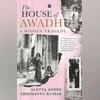 "'The House of Awadh' delves into Begum Wilayat Mahal's hidden world")











